How Organic Oats Are Grown From Seed To Harvest
Most of what we eat, especially in plant-based diets, starts as a single seed. Thanks to organic farmers who take pride in growing clean, honest ingredients, those seeds grow into healthy crops that nourish both the earth and the people who eat it.
Many of us know where our food comes from, but fewer of us understand the full oat growing process, from seed to harvest, and that’s what we’re uncovering today.
At One Degree Organics, every ingredient has a story. We hope that the story of how our organic oats are grown inspires you to look closer into the other foods you eat, and to appreciate the work that goes into growing a simple a bowl of oats. When we understand how our food is grown, we start making smarter, healthier choices, choices that ripple outward, benefiting not just our own health, but the health of the planet too.
Organic Oats
What Are Organic Oats?
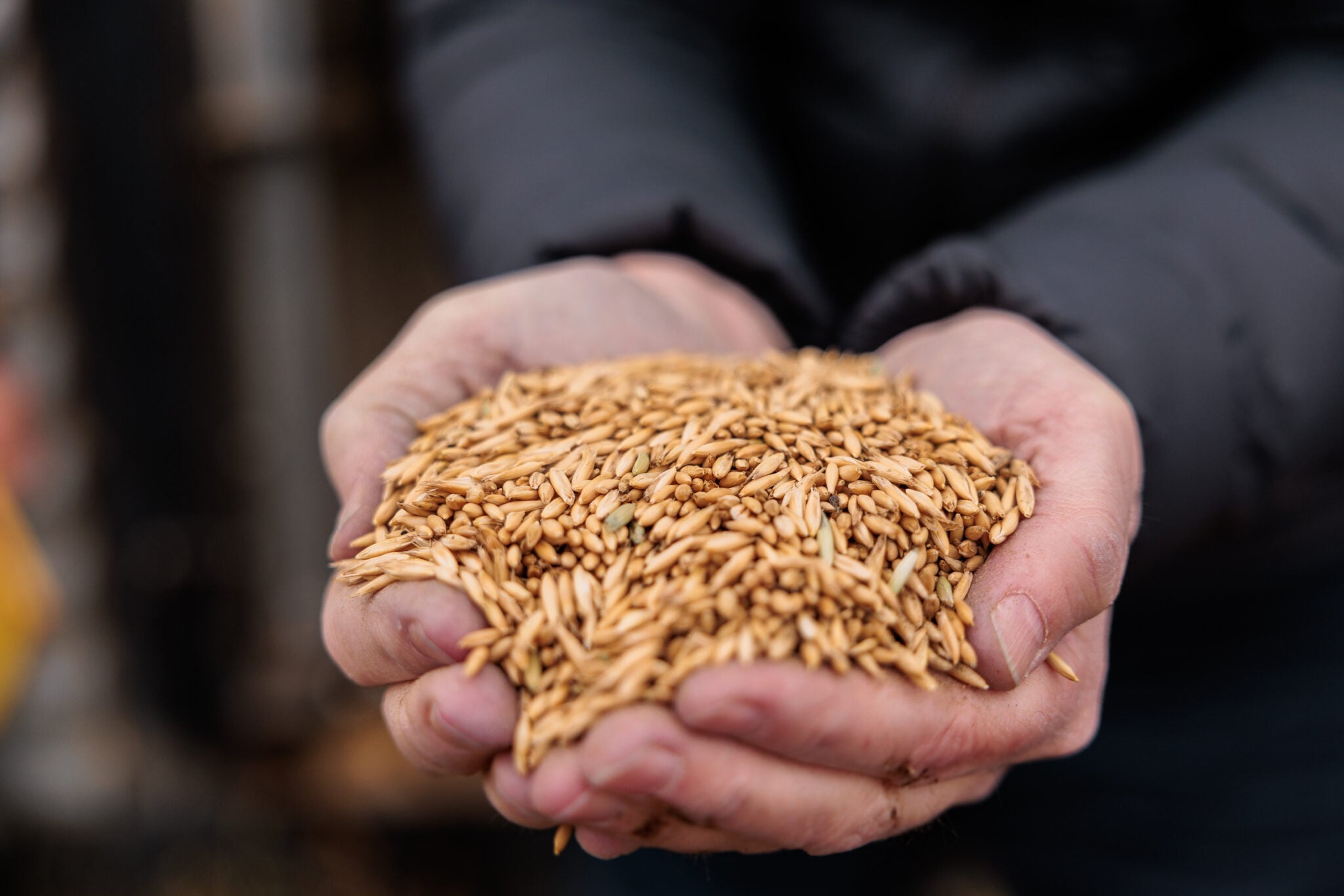
Organic oats are a whole grain crop grown organically around the world, thriving especially well in warmer climates like Canada’s Prairies where most of our certified organic oat farmers are located. Known for their fiber content and versatility, oats are a staple in plant-based diets, and an ingredient in everything from oatmeal to granola to dairy-free milk alternatives.
Seeding Organic Oats
Before seeding even begins, organic farmers like Brad Rabiey prepare the soil for their next rotation, which can range from peas to faba beans and flaxseed. These aren’t grown to be sold; they are grown to feed the soil itself. Marcus Koening went into detail explaining this during our farm visit. He mentioned that plants like faba beans which is often planted as cover crops hold bacteria in the roots of their nodules. These nodules are able to pull nitrogen straight from the air and turn it into nutrients that is fed to the soil and the plants that grow in it.

Eldon’s Farm Being Tilled During Field Days
Before these plants mature, they are tilled back into the soil to provide even more nutrients to the soil before the next seeding takes place. This process is referred to as green manuring which most of our organic farmer partners make use of on their farms.
Faba beans and peas are nitrogen-rich plants that add nutrients back into the soil, improving both soil biodiversity and PH levels. This helps crops like oats thrive during the warmer months, when weather conditions can be the deciding factor in whether a crop makes it to harvest at all. 1.
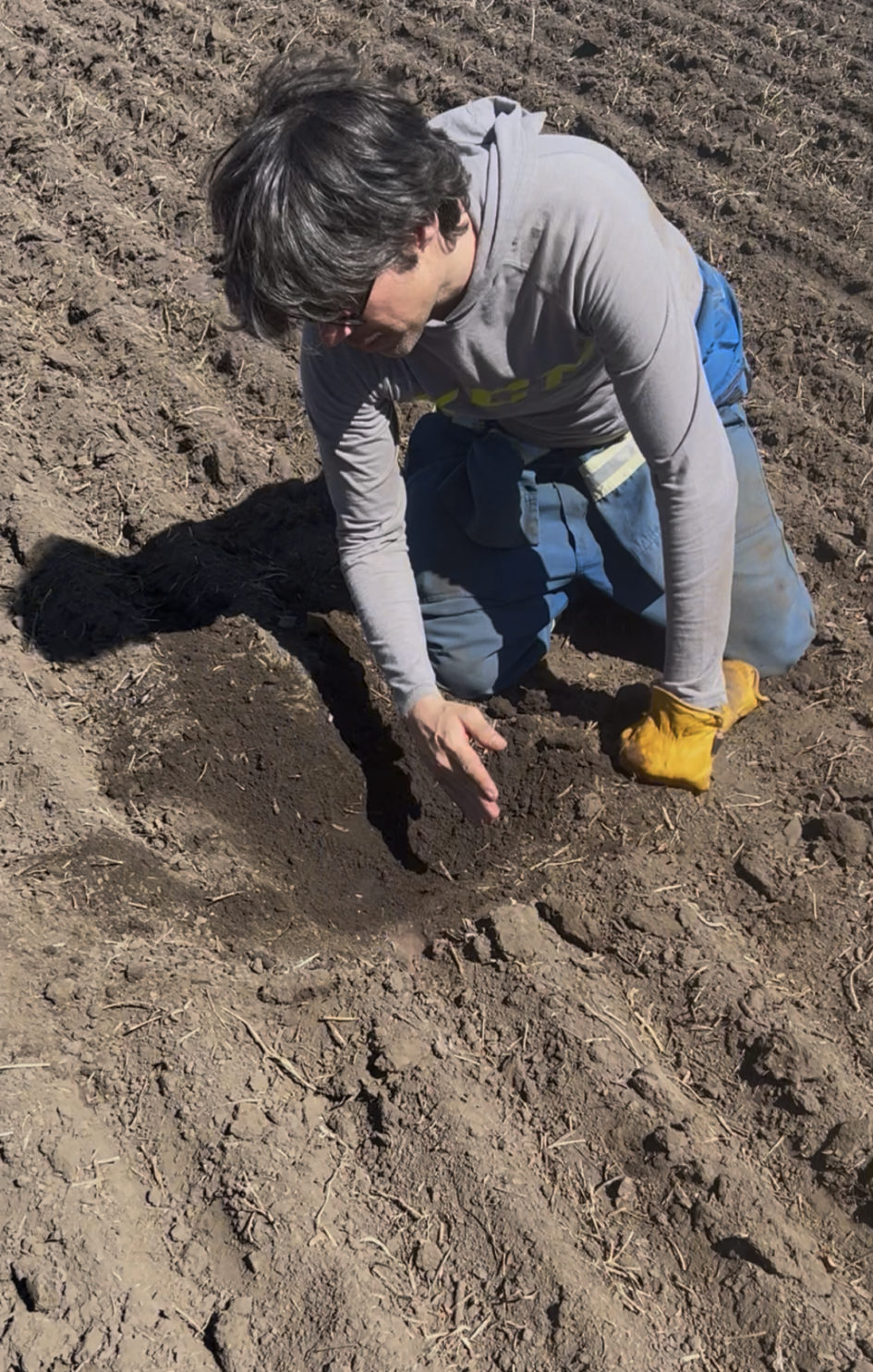
Brad Rabiey showing us the conditions of the soil before they seeded their farm
Oats are typically seeded in early spring, if the soil and weather cooperate. When we arrived at the Rabiey family farm in May to watch seeding take place it was, Brad and his dad were busy tilling the soil back over after an extreme downpour had stalled the process, the ground was simply too wet to till or seed. Brad explained that if seeds are planted while the soil is too wet, they won’t germinate. Instead, they’ll mold, rot, and not yield anything.
Farming is inherently unpredictable, and organic farmers are often at the mercy of the weather which can result in droughts, floods, and storms that can put an entire season’s crop at risk. So how do organic farmers work to mitigate these unpredictable conditions?
One answer lies in how they build and manage their soil. Practices like green manuring and strategic tillage help farmers create soil that’s rich in organic matter, with better structure and stronger water-holding capacity. Healthier, more resilient soil acts like a buffer- it absorbs and retains moisture during dry spells, making crops more drought-resistant, while also draining more effectively during heavy rains to reduce the risk of waterlogging and erosion.
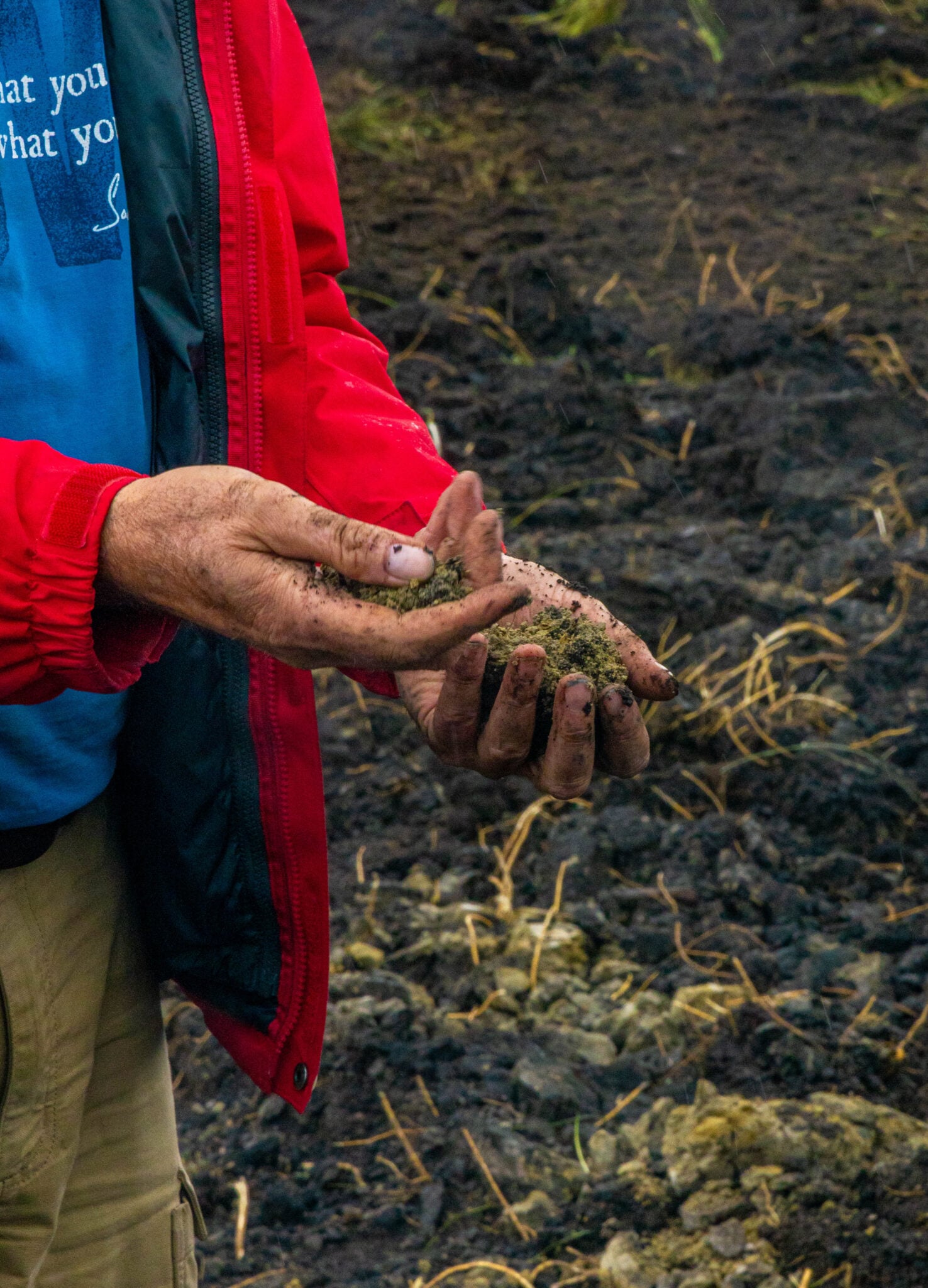
Farmer holding green manure on Eldon’s farm in Alberta
By focusing on soil health as the foundation of their farming practices, organic farmers aren’t just growing this season’s crop. They’re building long-term resilience against the very conditions they can’t control.
Brad also shared that he purchased this land a few years ago from a conventional farmer. It took three years of growing nitrogen-rich crops like faba beans and peas, and rotating them back into the soil, before the land had enough restored nutrients to become a certified organic farm.
The soil that day was perfect: just a few inches down, it was still moist from the previous rainfall, and it was soft and loose enough to be seeded.
Once the soil is tilled and tested to confirm the pH levels are right, a grain drill, which is a massive piece of farming equipment, seeds the land through pressurized pipes angled precisely to plant the oat seeds at the right depth and spacing. Brad rode the grain drill and showed us his view from the driver’s seat, which, we have to say, is a tedious and lengthy job. He has to steer the drill at just the right angle to make the most of every inch of land. The grain drill holds all the grain being planted, and Brad noted that he only uses the best oats from his previous harvest to seed the next crop, one he’ll harvest again in just a few months.
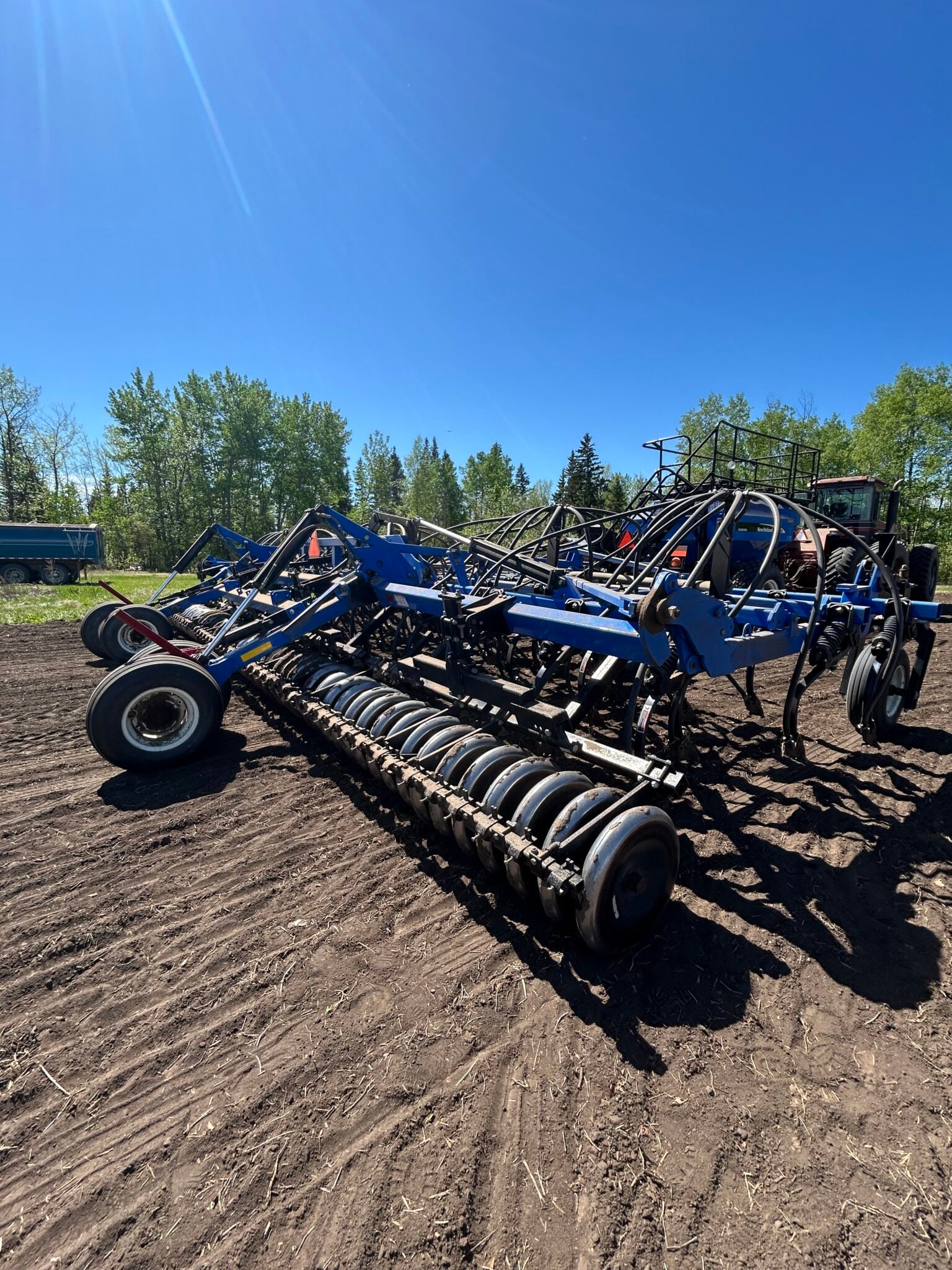
The machine used to seed fields. Many decades ago this process was done by horse and hand.
The timing of seeding matters for another reason too: it gives the crop a head start over the weeds, something that’s simply unavoidable in organic farming. If the crop can outgrow the weeds early on, it becomes much easier for farmers to run a weed-cutter machine, like the one Peter Wiebe uses on his farm, through the field. The machine combs through the crop and cuts only the weeds, leaving the oats untouched. This is a key weed control strategy in organic farming, since herbicides aren’t used or permitted.
In organic farming, it really is all about timing, and our farmers are watching more than just the clock.
Germinating Organic Oats
Once the seeds have been planted into the ground, Brad mentioned that he won’t water them immediately. Instead, he plants the seeds a little higher up in the soil to ensure they get the right amount of moisture in the mornings and evenings, when temperatures drop on the field. This allows the seed to properly germinate; this is a process that can take between 7 and 10 days.
Oat seeds also have a natural dormancy period before they sprout. This dormancy helps them stay viable until conditions are right for growth. Temperature, moisture ,light, and soil conditions all need to align before a seed will begin germinating.2.
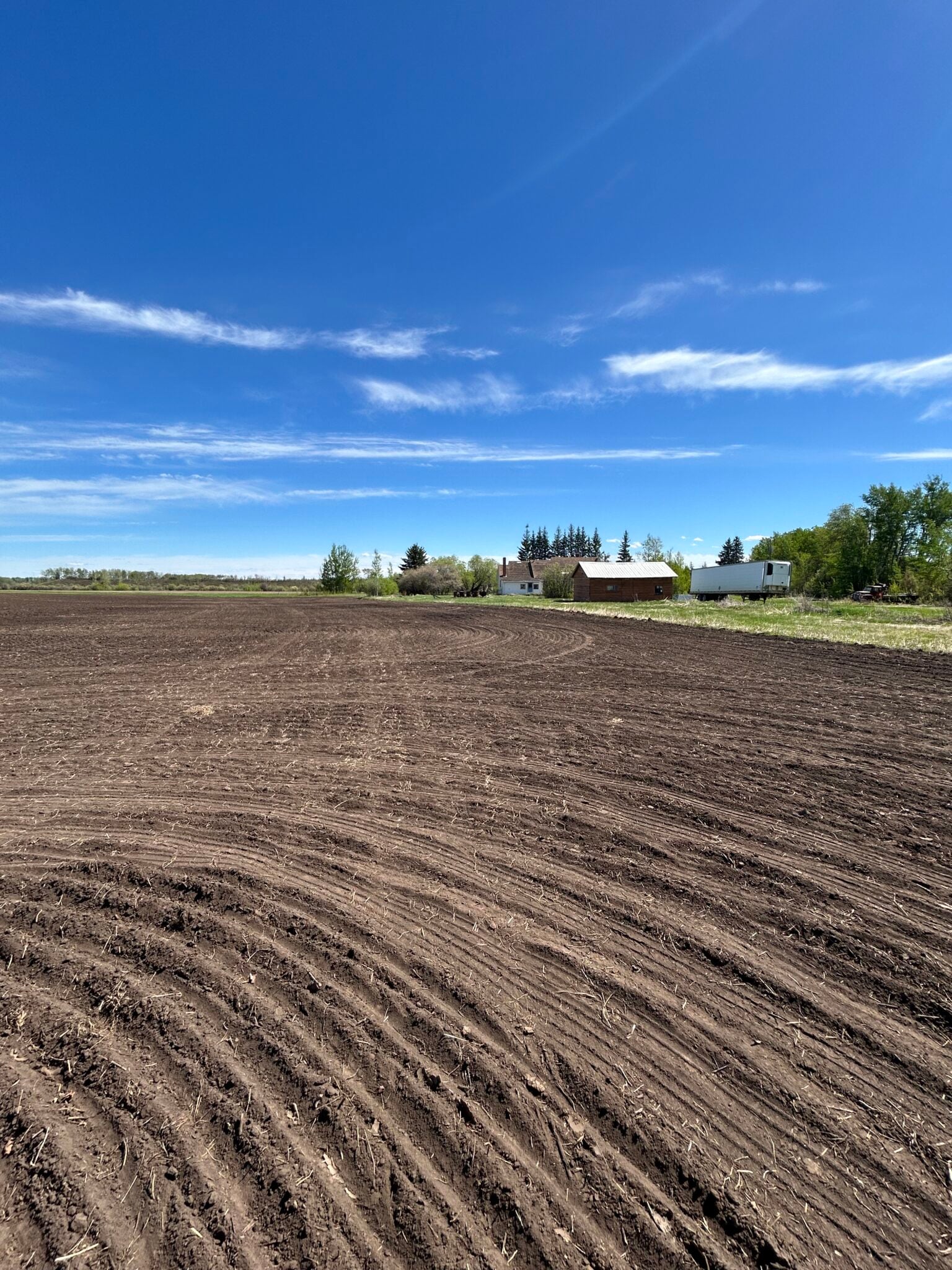
Brad Rabiey’s freshly seeded farm
Once the seed has germinated, the growing process truly begins, and farmers shift into a season of monitoring, tending, and working alongside nature to grow the healthiest crops possible. For many farmers, the path forward isn’t always predictable, which is exactly why organic farming is such an ongoing, hands-on process.
Many farmers prefer organic methods because of how the soil performs during challenging conditions like drought. Organic soil tends to retain moisture far better than conventionally farmed soil, which is often depleted from chemical use to the point that it struggles to absorb water and deliver it to the roots of the crops which needs it most.
During this stage, the roots begin to develop, and the first sprouts start pushing through the soil’s surface. For farmers, this is a welcome sign: it means the seeds are taking hold and growing, and it’s the cue to shift into full gear, keeping pests at bay and the soil healthy so the plant can keep growing.
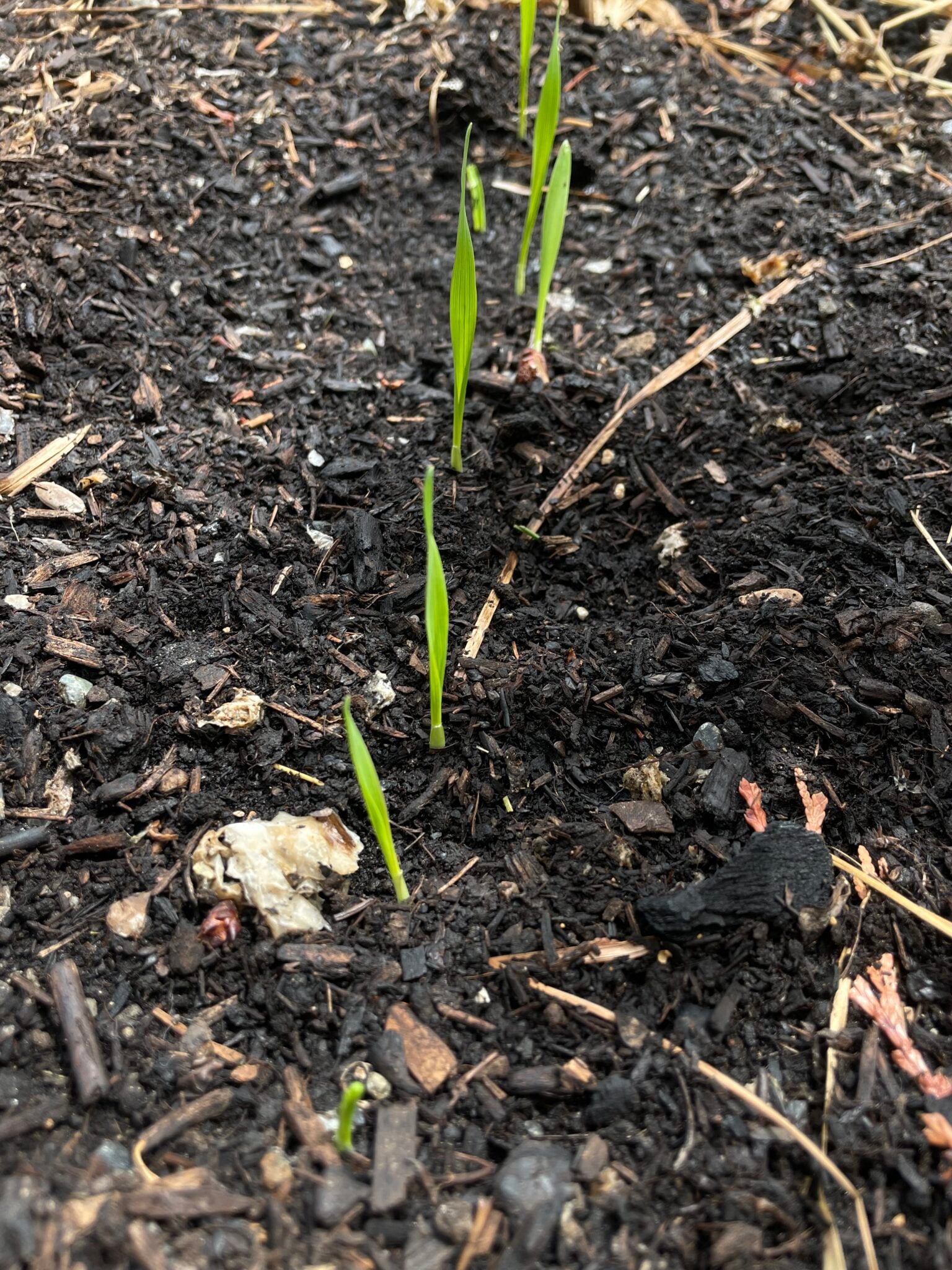
Oats sprouting from the ground
Vegetative Stage of Organic Oats
During this stage, the roots continue developing, and leaves begin to form along the long stems of the oat’s plants. It’s called the vegetative stage because this is the part where the seed becomes a plant or vegetable. This growth phase typically takes 4 to 6 weeks to complete. By this point, the entire field turns a vibrant green, blanketed in oat crops that will soon begin changing color as harvest approaches. 3.
Canada’s Prairies are known for their long daylight hours and shorter evenings, conditions that make the region ideal for growing organic oats. It’s recognized as one of the best oat-growing regions in the world. But even with near-perfect growing conditions, any delay in seeding or harvesting can seriously damage a crop.
For example, if the rain had continued, the seeds couldn’t have been planted on time, shrinking the window for germination and vegetative growth, and ultimately leading to a smaller yield. That’s exactly why Brad Rabiey worked the fields until 1 a.m. most days this year, racing to till the soil before his window closed for seeding.
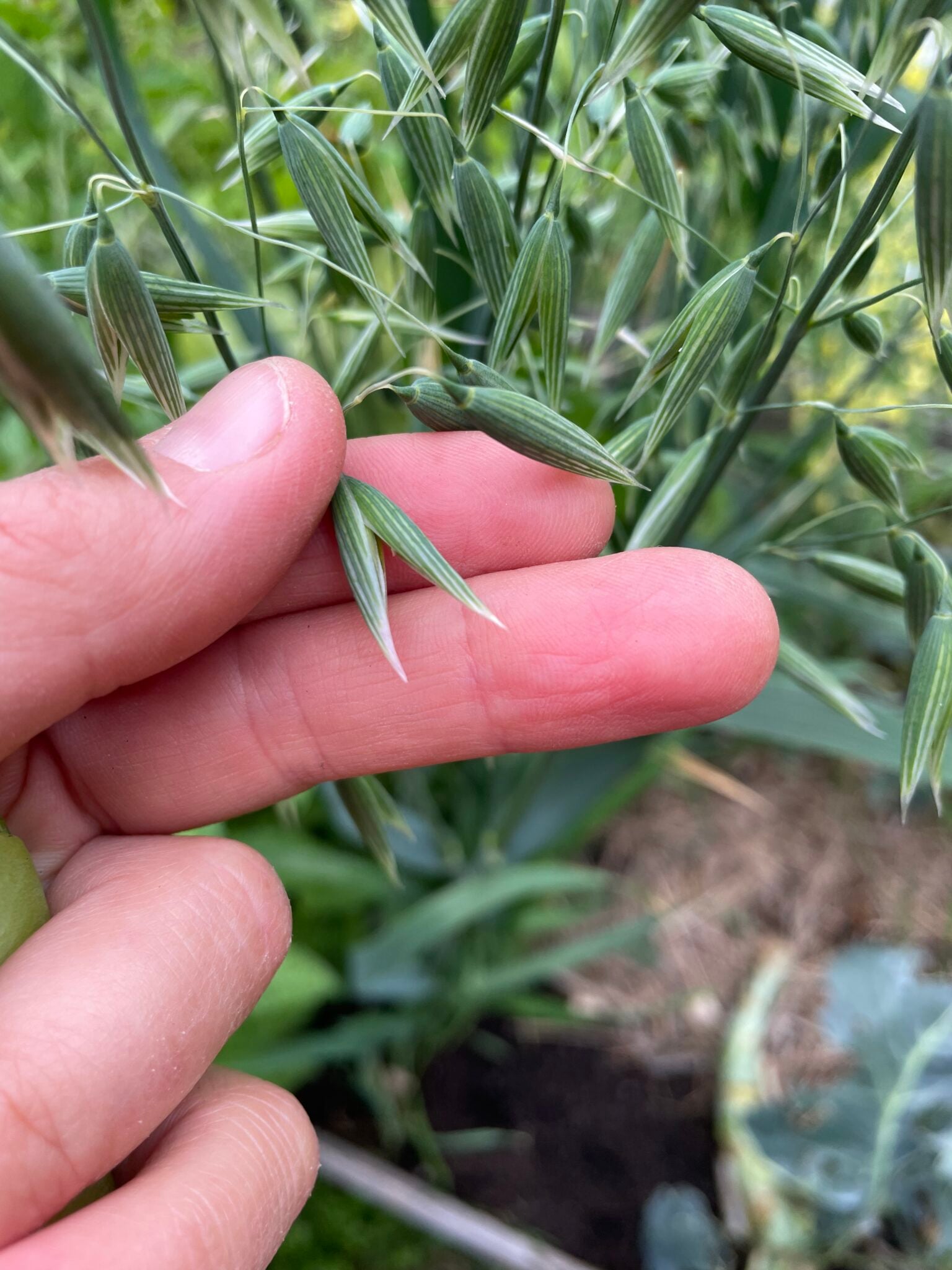
The oats in this picture is moving into the reproductive stage
Reproductive Stage
This is the final stage before harvest begins. During this stage the oats start to flower, pollinate where the plant will reach its peak and begins to change color from green to golden brown and they start to produce seeds.
Before the oat grains dry and change color they contain a milky-white fluid substance which indicates active starch accumulation. As the grain continues to grow the milky fluid inside becomes thicker and the moisture content begins to drop significantly which is why it changes color. 4.
Did you know that oats are primarily wind pollinated? The pollination phase usually takes about 5-7 days to complete. 5.
Towards the end of the reproductive stage the moisture content in the plant begins to drop which makes the colour change and the plant dry out, this is also referred to as the ripening stage. Most think that the plant is what we eat when we speak of oats but it’s the dried seeds that form on the top of the plant that is harvested and processed into oats.
Monitoring the oat growth stages for any farmer is effective crop management. During these stages farmers are identifying the precise timing of pest and disease control measures for applying organic methods to control pests and weeds when plants are most receptible.6.
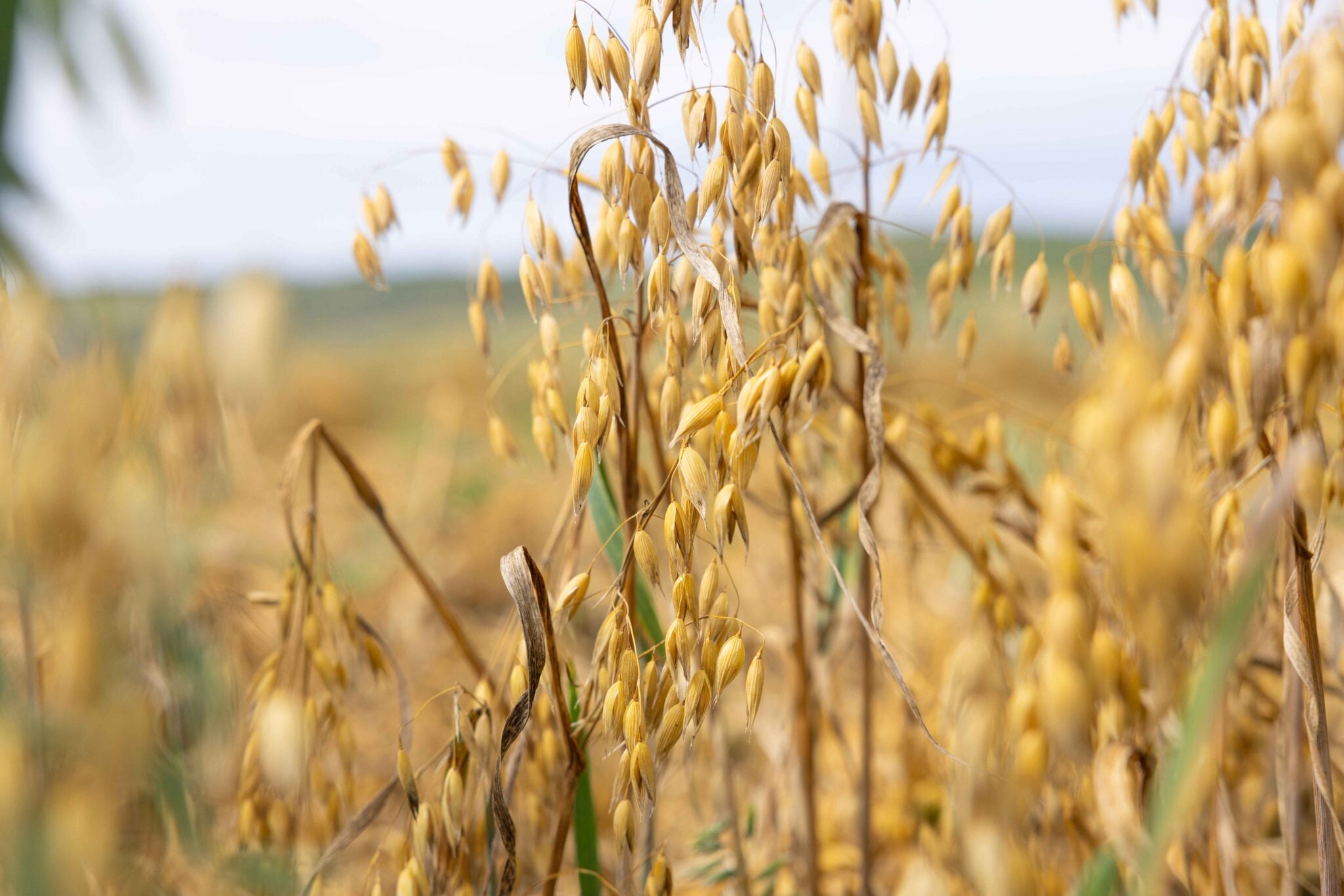
These are matured oats from Peter Wiebe’s field in Alberta
Harvest Season
Timing is critical during harvest season as harvesting too early could result in an immature harvest whereas harvesting too late could result in losses because of birds eating the crops or weather that in the prairie provinces drops below zero and can kill the plant. 7.
After months of careful tending, watching the weather, and working with nature rather than against it, harvest season is the payoff every organic farmer waits for. By this point, the once-green fields have turned a deep golden brown, and the oats are ready to come off the land.

These oats are ready for harvest
Traditionally, oats are cut and left in swaths, also called windrows, to dry further before threshing. This swathing step is still common even with modern combine harvesting, because oats don’t ripen evenly across a field. Some plants reach peak dryness before others, so cutting the crop and laying it in rows lets the entire swath dry down evenly under the sun before it’s fully processed. It’s a small extra step, but it makes a big difference in grain quality. 8.
Once the oats have dried, they’re ready to be combined, meaning harvested and threshed in a single pass. The combine cuts the swathed oats, separates the grain from the straw and chaff, and collects the clean grain into its tank, while the leftover straw is spread back over the field. That straw isn’t wasted either; it often gets incorporated back into the soil or used as bedding and feed on the farm, keeping the whole cycle sustainable from seed to harvest and back again.
Timing, once again, is everything. Harvest too early, and the moisture content is too high, risking mold or spoilage in storage. Harvest too late, and the crop can be damaged by wind, rain, or shattering, where the seed heads drop their grain onto the ground before the combine ever reaches them. Organic farmers like Brad watch the weather, the moisture meters, and the fields closely during this window, because getting harvest right is just as critical as everything that came before it.
Brad mentioned that when they are in harvest mode on his farm, he sees five different things going on all at once. Something that everyone gets the most excited by is the big combine which collects and separates the grain from the stalk and offloads it to the trucks which bring the grain from field to the bin yard, which requires bin management.
Once harvested, the oats are stored in silos and dried at the right temperature to preserve their freshness by the time they leave the farm and arrive at our facility.
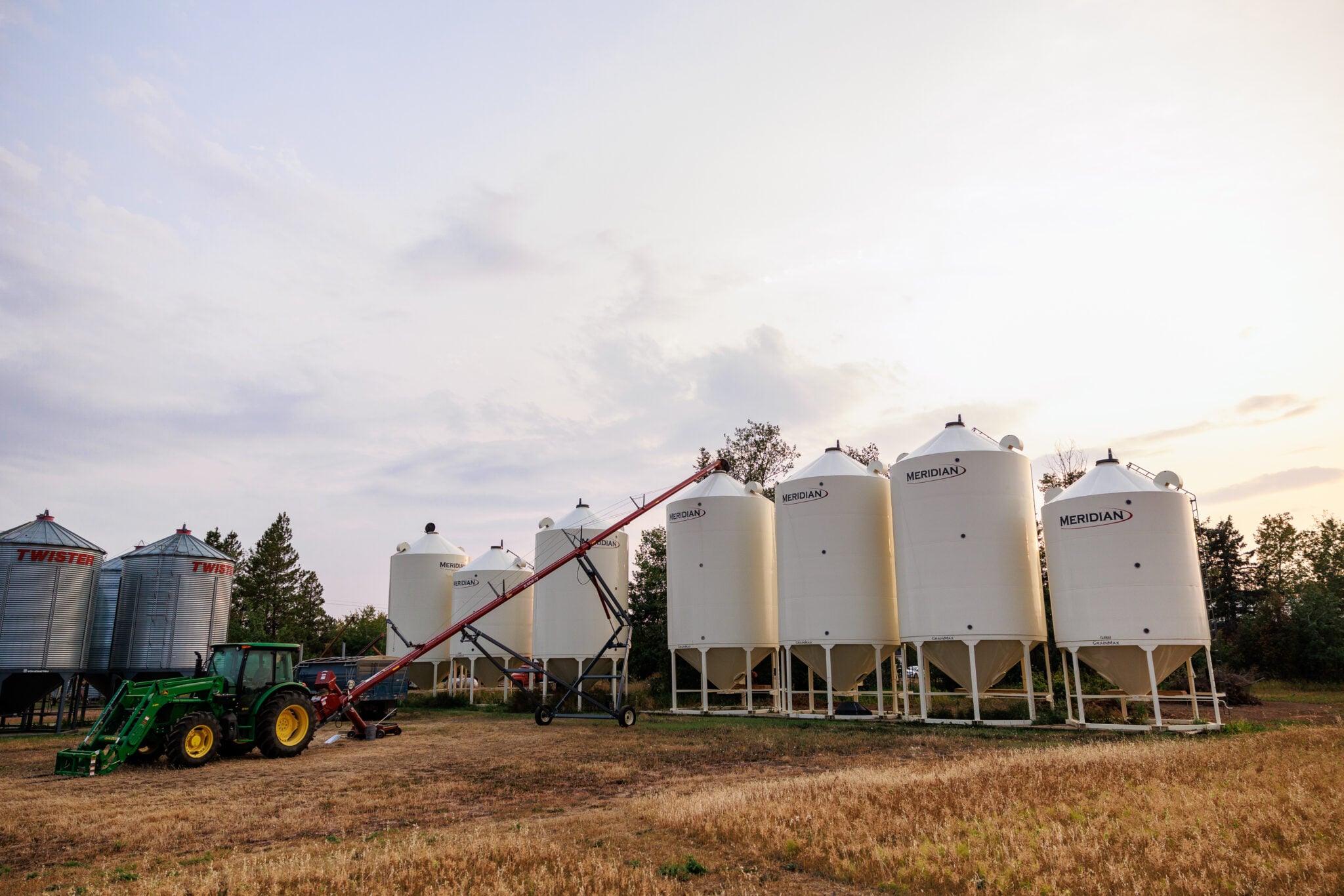
Harvest season on Brad Rabiey’s field. The oats have been harvested and stored in silos
But for farmers like Brad Rabiey, the work doesn’t stop once the combine finishes its pass. Almost immediately, Brad gets back into the tractor to till the crop residue left behind directly back into the soil. Rather than going to waste, this leftover plant matter breaks down into green manure, feeding nutrients back into the ground and building up organic matter. Within just a few months, the soil is replenished and ready for the next round of seeding, which Brad says will likely be flax or peas.
It’s a cycle that never really stops: one crop’s leftovers become the foundation for the next, keeping the soil healthy and productive season after season.
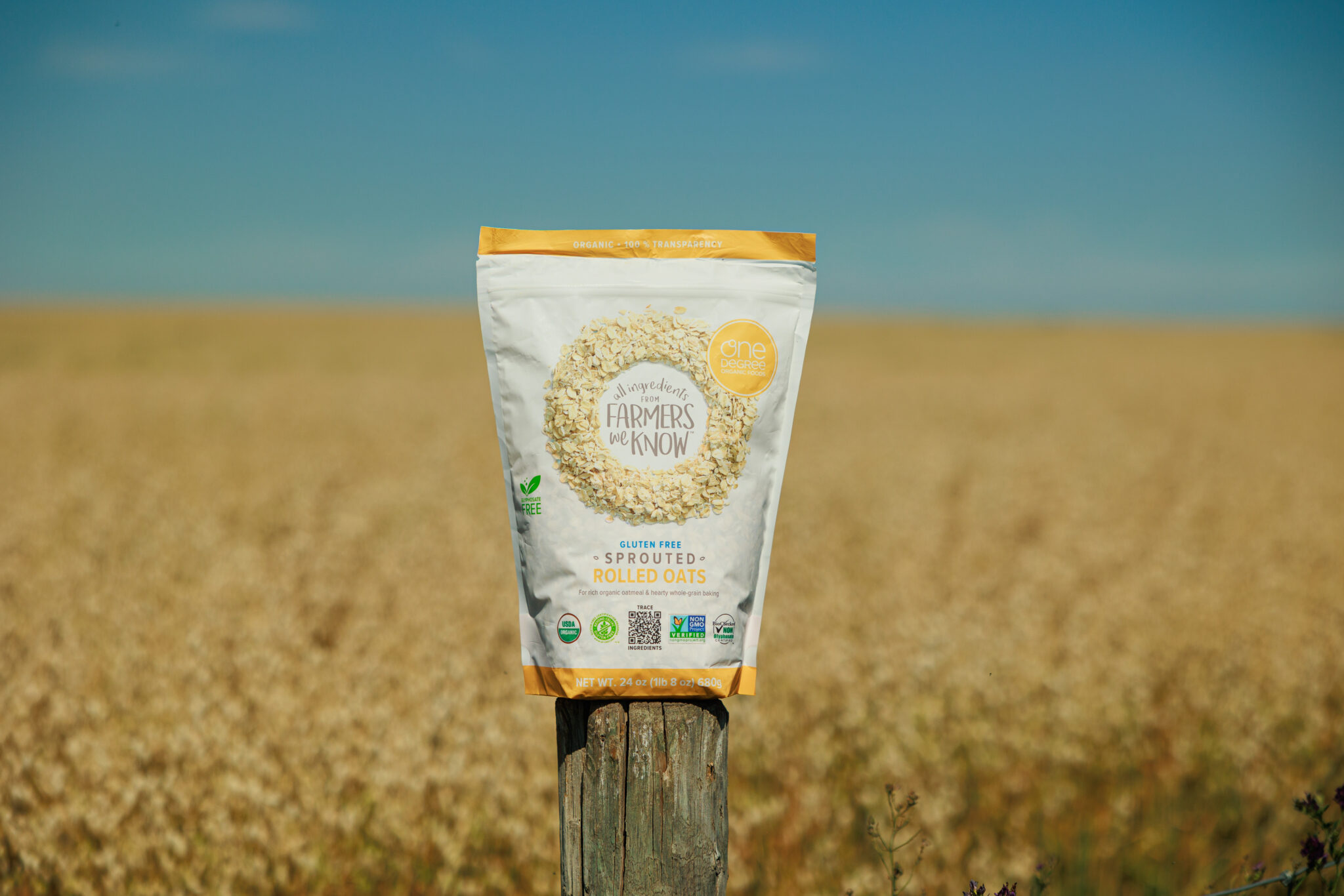
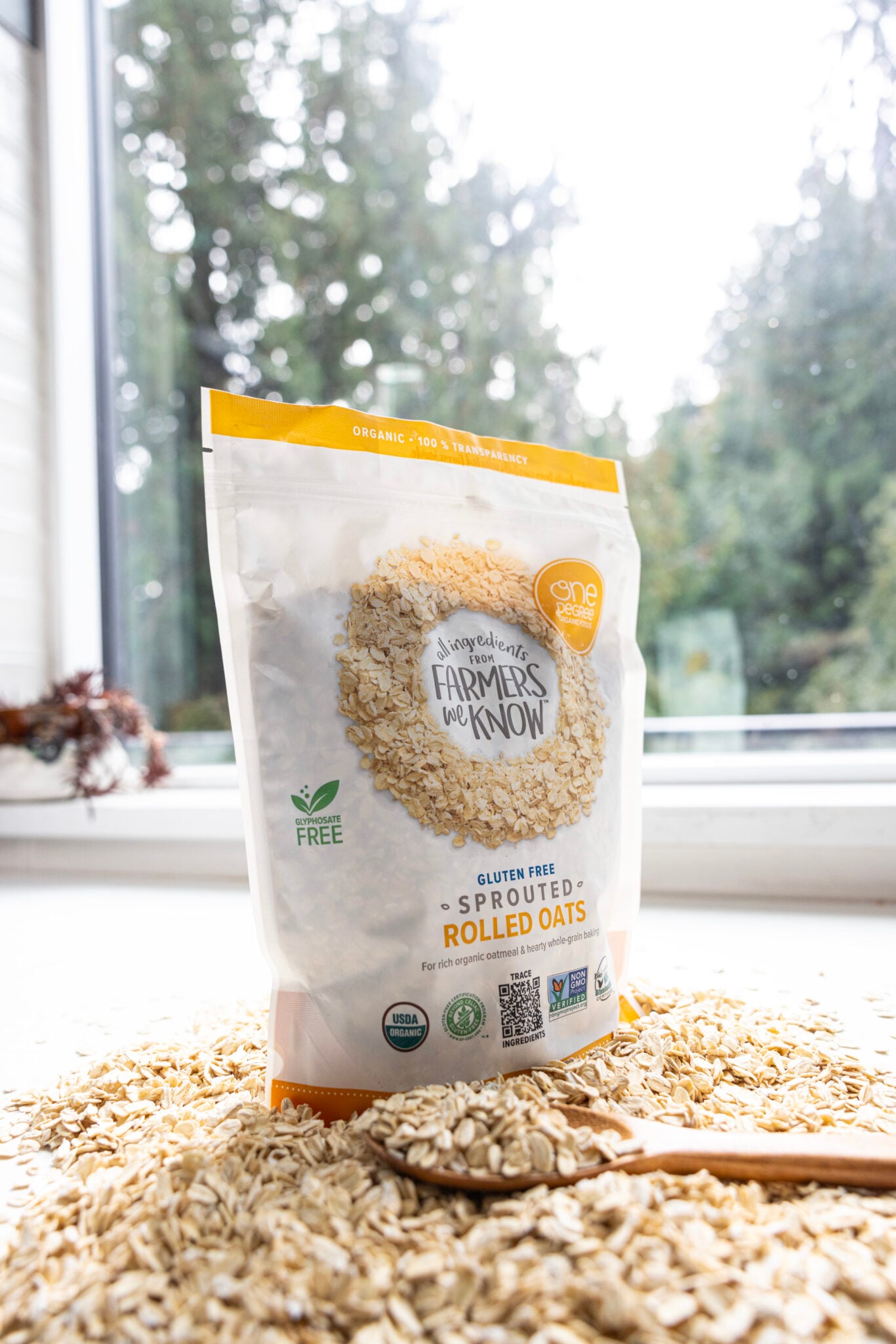
Our Sprouted Rolled Oats on the Klondyke farm that grew them
At One Degree Organics every ingredient has a story and we hope you found value in learning about how your oats are grown. We believe that knowing more about your food gives you the power to make informed choices which help protect the planet, our health and clean food and it starts with the seeds planted by our certified organic farmers who provide us with clean ingredients which we turn into your family’s favorite certified organic, glyphosate-free, sprouted cereals, granola, oatmeal and flour.
REFERENCES
- Getting Started With Organic Oats Available from: https://rodaleinstitute.org/blog/getting-started-with-organic-oats/ Accessed on: August, 2026
- Oats Lifecycle Available from: https://growplant.org/blog/oats-life-cycle/ Accessed on: August, 2026
- Oats Lifecycle Available from: https://growplant.org/blog/oats-life-cycle/ Accessed on: August, 2026
- A Breakdown Of The Oat Growth Stages Available from:https://biologyinsights.com/a-breakdown-of-the-oat-growth-stages/ Accessed on: August, 2026
- Oats Lifecycle Available from: https://growplant.org/blog/oats-life-cycle/ Accessed on: August, 2026
- A Breakdown Of The Oat Growth Stages Available from:https://biologyinsights.com/a-breakdown-of-the-oat-growth-stages/ Accessed on: August, 2026
- Grain Growing Guide Available from: https://jnbseed.com/grain-growing-guide Accessed on: August, 2026
- Combine Harvesters Available from: https://agroparts.us/articles/combine-harvesters/combine-harvester-since-invention-to-nowadays?srsltid=AfmBOorGAeWej6zNNqK1DBXGEtRdHpy63I8xXfNfoWfLWMFUg8ZpA5kA Accessed on: August, 2026