Seeding Organic Oats: Behind-the-scenes
At One Degree Organics, we believe every ingredient has a story worth telling. Knowing where your food comes from, how it is grown, and whether it is safe for your family starts with the farms and farmers who make it all possible. Today, we’re excited to give you a behind-the-scenes look at the work, dedication, and planning that go into capturing these stories and bringing them to your table with every ingredient we source.
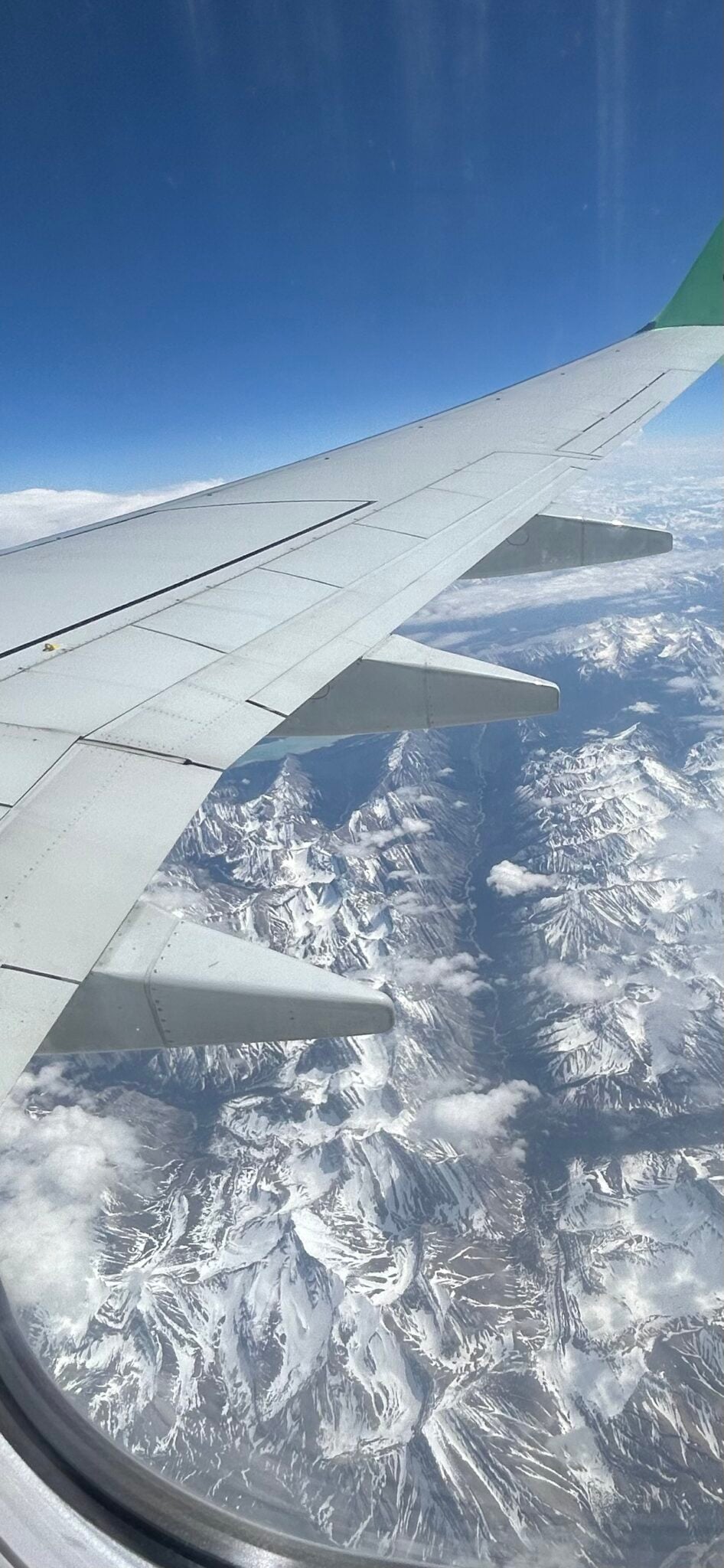
The view of the Rocky Mountains from our flight to Edmonton
Our journey began with a short flight from Vancouver, British Columbia, to Edmonton, Alberta, Canada’s fifth-largest city. From there, we set out on a 500 km (300 mi) drive through the vast Canadian prairies, a region known for producing some of the highest-quality oats in the world. Our destination was Manning, Alberta, home to the Rabiey family farm.
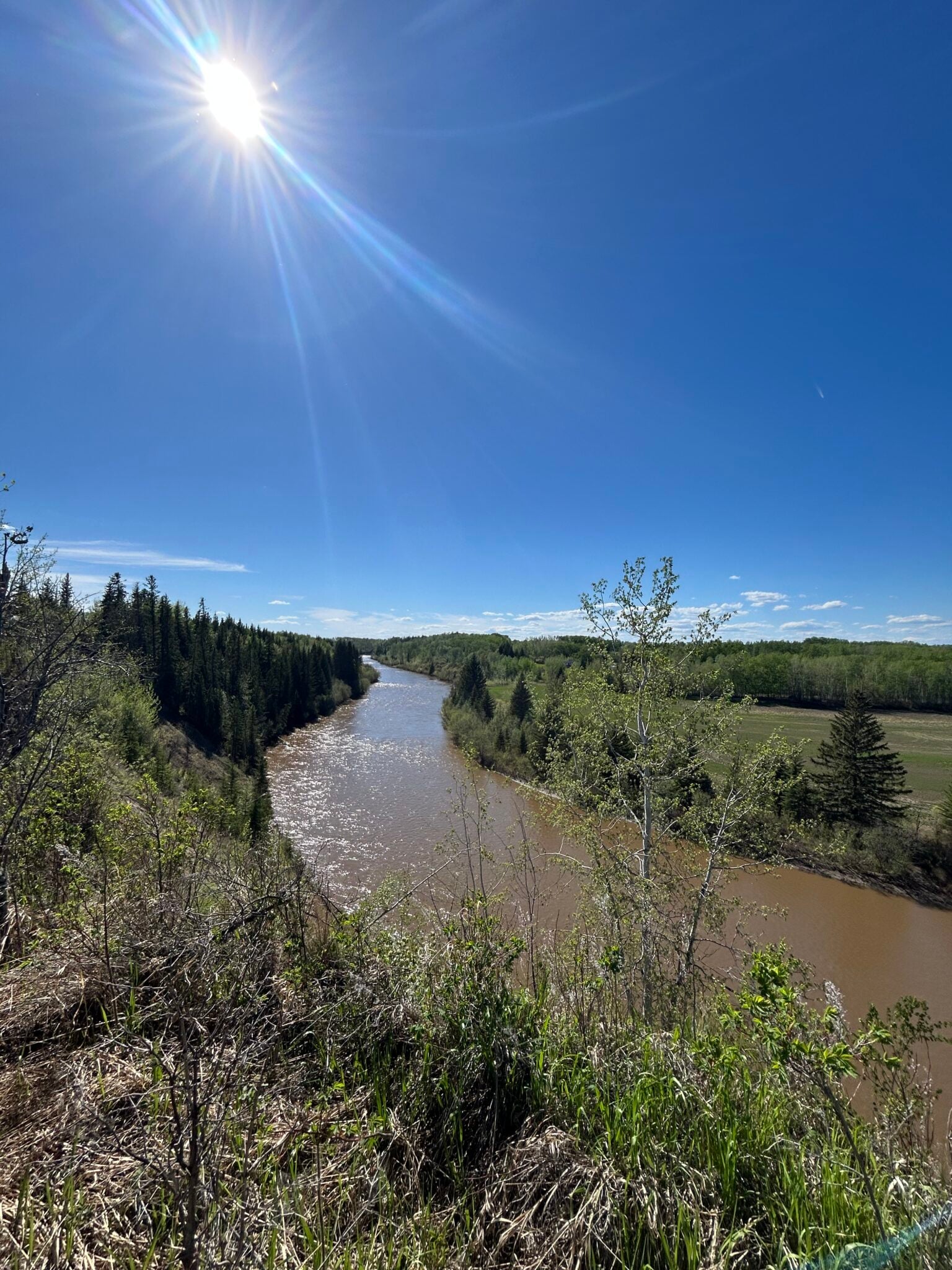
The Peace River flowing alongside the Rabiey Farm
Brad Rabiey’s family farm is located near the 1923 km (1195 mi) Peace River; a place Brad has called home his entire life and where he is now raising his own children. Growing up in the area, Brad spent countless hours fishing along the riverbanks, helping on the family farm, and exploring the rolling countryside that surrounds it.
The Rabiey Family Farm
This trip to Manning marked our fourth visit with the Rabiey family, and each visit feels a little more like catching up with old friends.
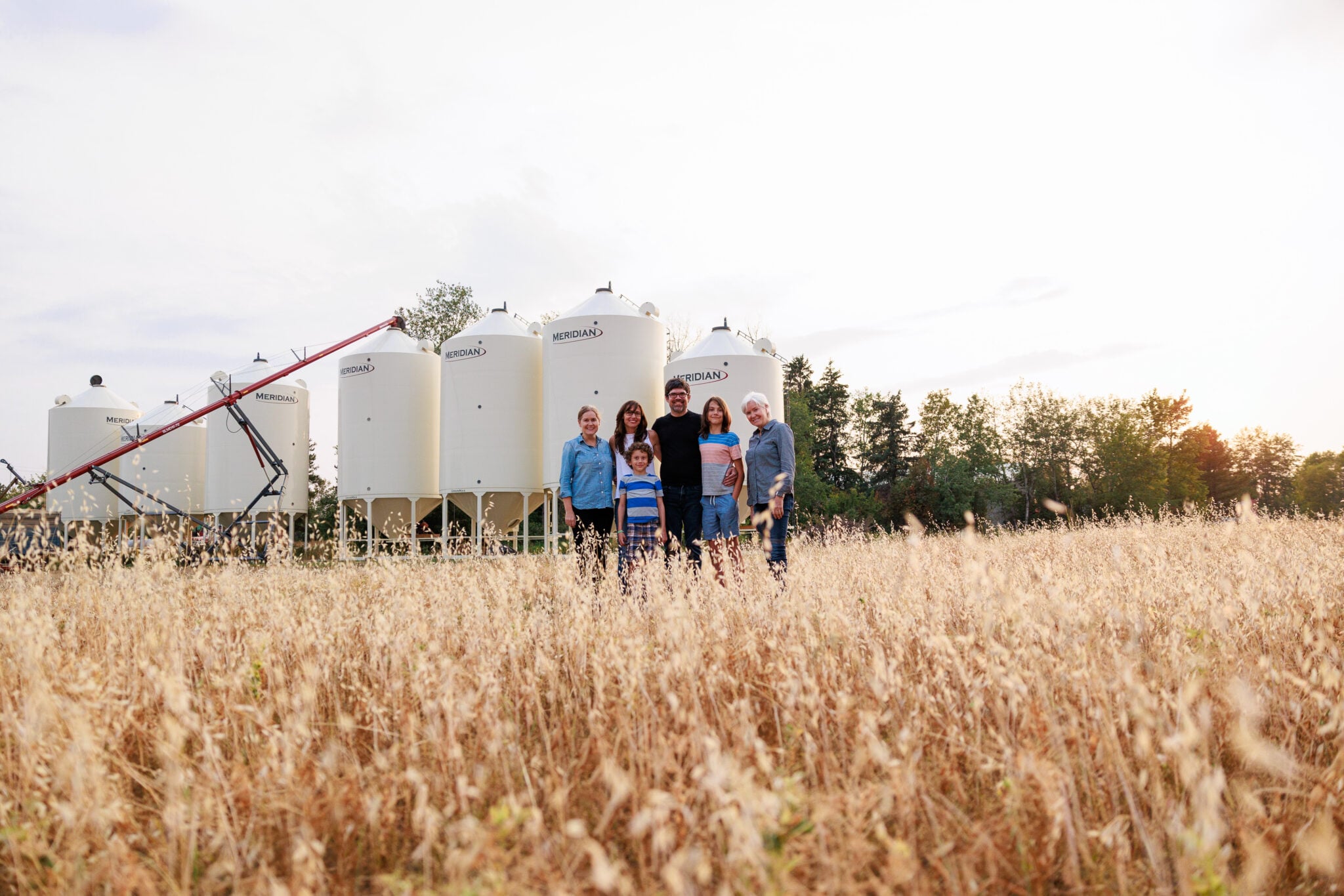
We last visited the Rabiey family farm during harvest season in 2025
As always, it was wonderful to spend time with the entire family. Birch shared that he has recently discovered a passion for baking and has even started creating his own recipes, something we are already looking forward to trying on a future visit. He also proudly told us about riding in the combine last year and confirmed that his dad was right during the harvest video we created, in saying the combine is a lot like playing PlayStation.
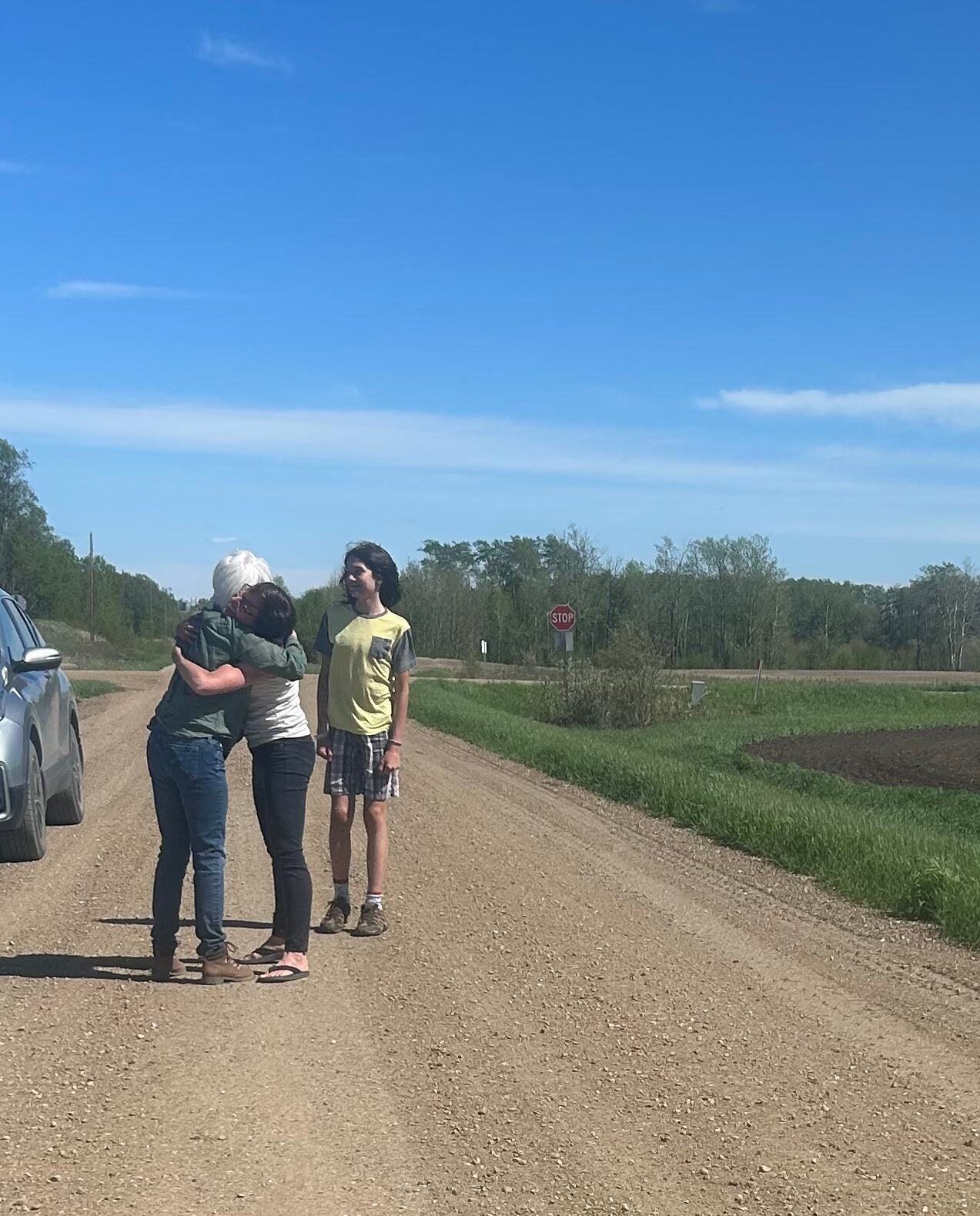
Kathy greeting Rebecca and Birch for the first time since her last visit in 2025
What makes these visits so special is not only seeing how the crops have grown, but how the families behind them have grown too. After four visits, we’ve watched fields change, farms expand, and children grow up and discover new interests along the way. We are truly grateful to the Rabiey family for continuing to welcome us onto their farm and for sharing a genuine look into their lives, their work, and the care that goes into every harvest.
Learn more about our first visit to the Rabiey farm
Farming Along the Peace River
Known for its fertile soils and exceptionally long summer days, with sunlight often stretching from 4 am until nearly 10 pm, the Peace River has become one of Canada’s most productive farming regions.
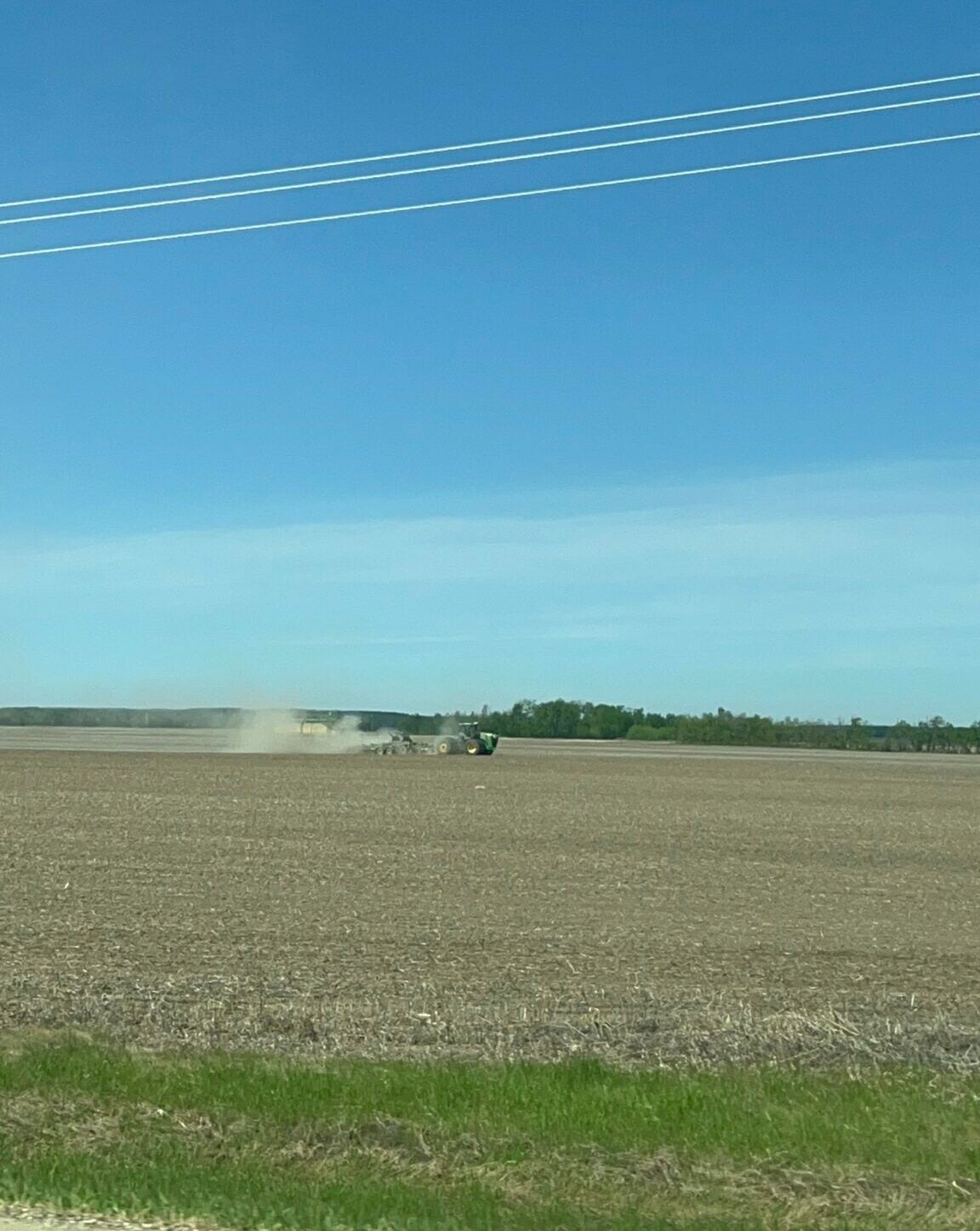
Farmers around the area were preparing their fields for seeding season
Along the drive towards Manning, we passed through historic communities such as Whitecourt and Peace River, surrounded by farmland stretching as far as the eye could see. We spotted a bit of Canadian wildlife, and a few oil pumpjacks along the horizon which is no surprise since Alberta accounts for about 90% of Canada’s oil production.1
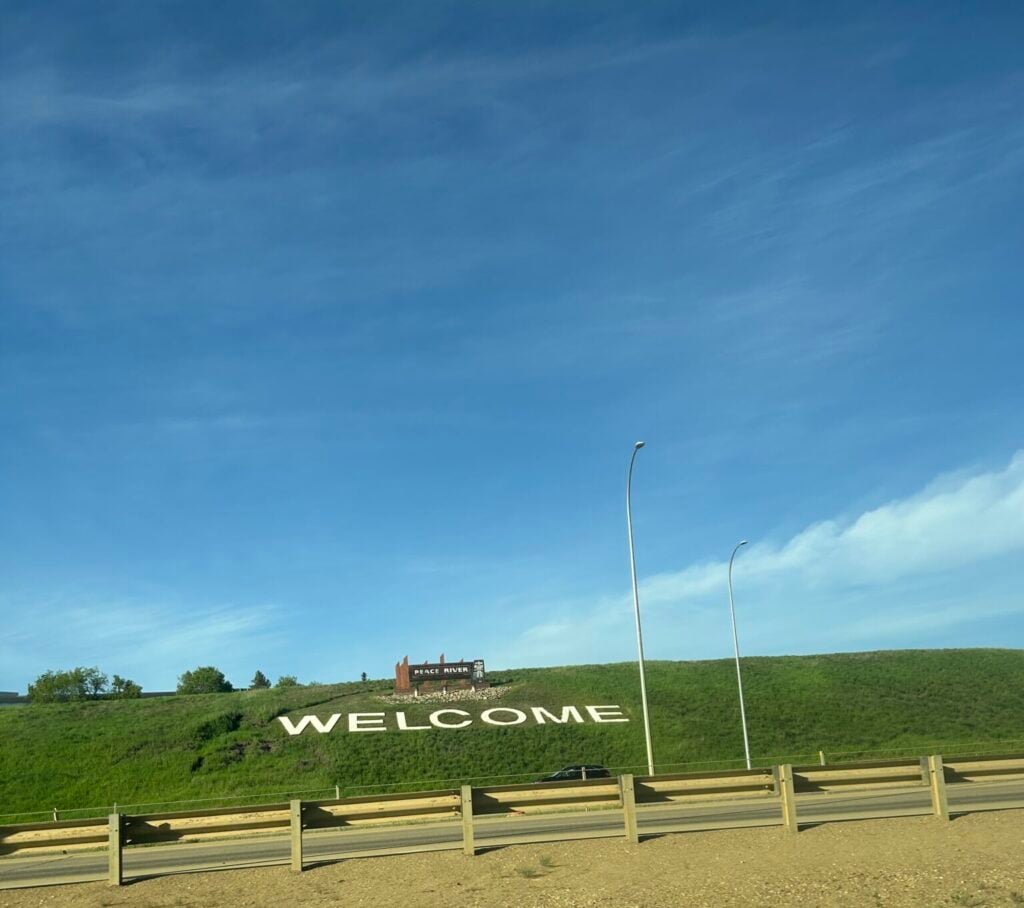
The welcome sign for Peace River
Many of the farm fields we passed had already been prepared for the upcoming growing season, with farmers closely watching the weather and waiting for the right conditions to begin seeding. Like many across the region, the Rabiey family faced a challenging spring of unpredictable weather and heavy rainfall that left soils too wet to work.
Although the journey was long, seeing firsthand how our grains are seeded, and witnessing the real-time challenges farmers navigate, brings a deeper appreciation for the resilience, patience, and dedication it takes to grow clean, high-quality ingredients.
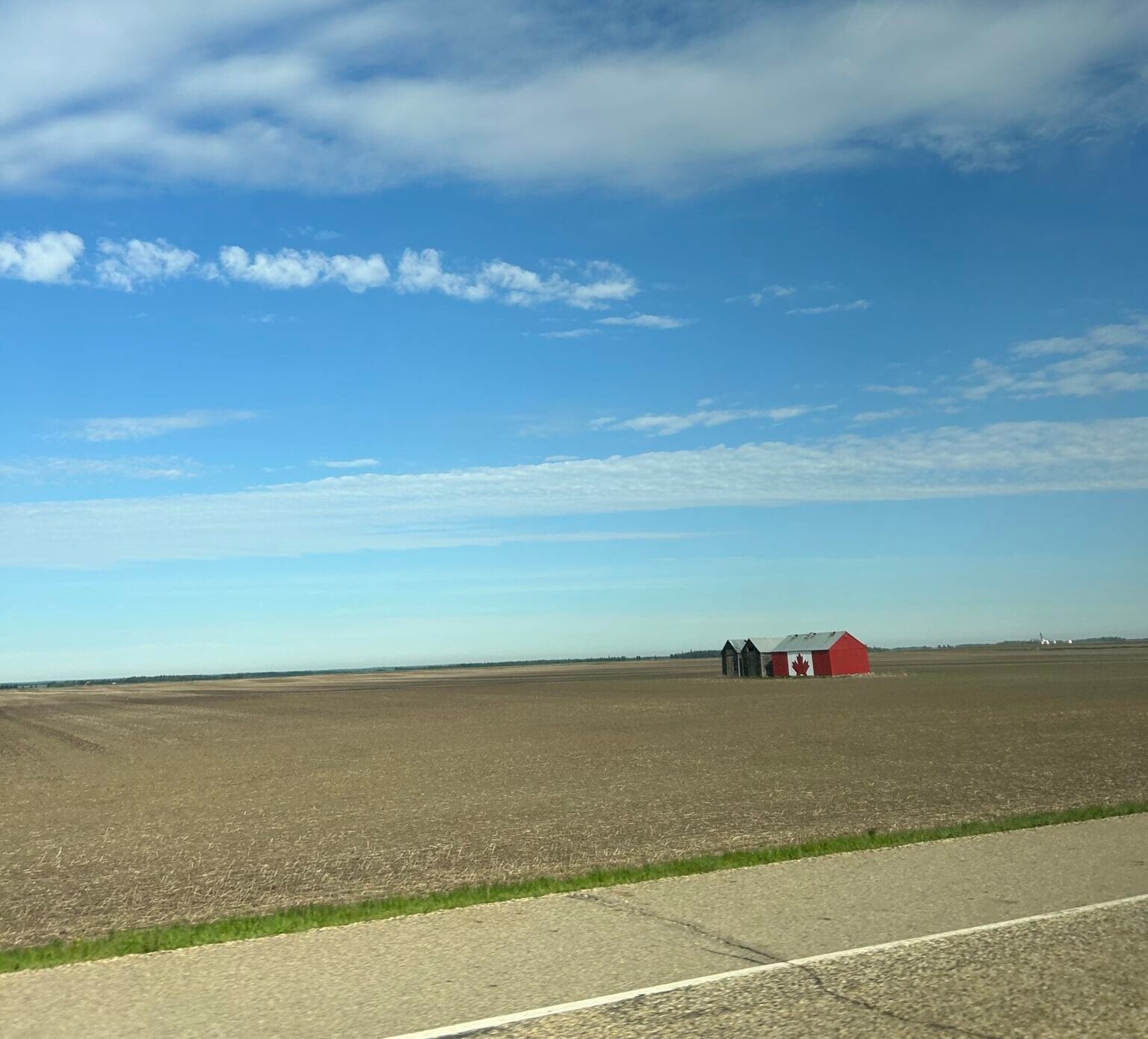
This was the farm land we seen on our drive to Brad Rabiey’s farm
By the time we arrived at the Rabiey farm, Brad and his dad were already in the middle of seeding their organic fields before the rain came in. During rainy seasons, fieldwork can come to a standstill, so every sunny day counts.
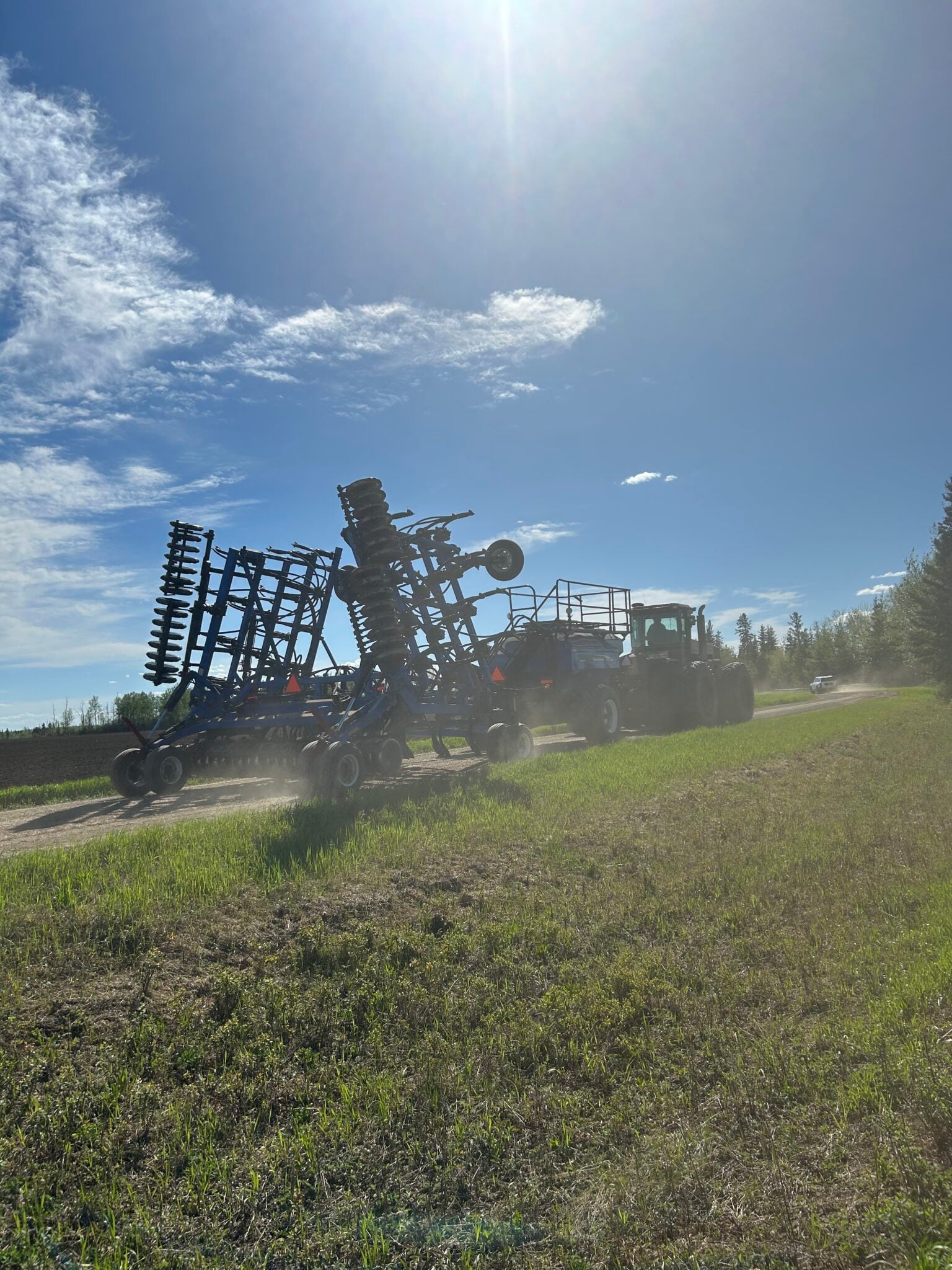
Brad Rabiey driving the seed drill machine around the field he just seeded
Like many farmers across the region, Brad was keeping a close eye on the weather while working long hours to make the most of every opportunity. This is a perfect example of how our farmers work with nature to produce the best possible crops. Nature sets the timing, and our farmers do the hard work of seeding, maintaining, harvesting, and growing healthy food.
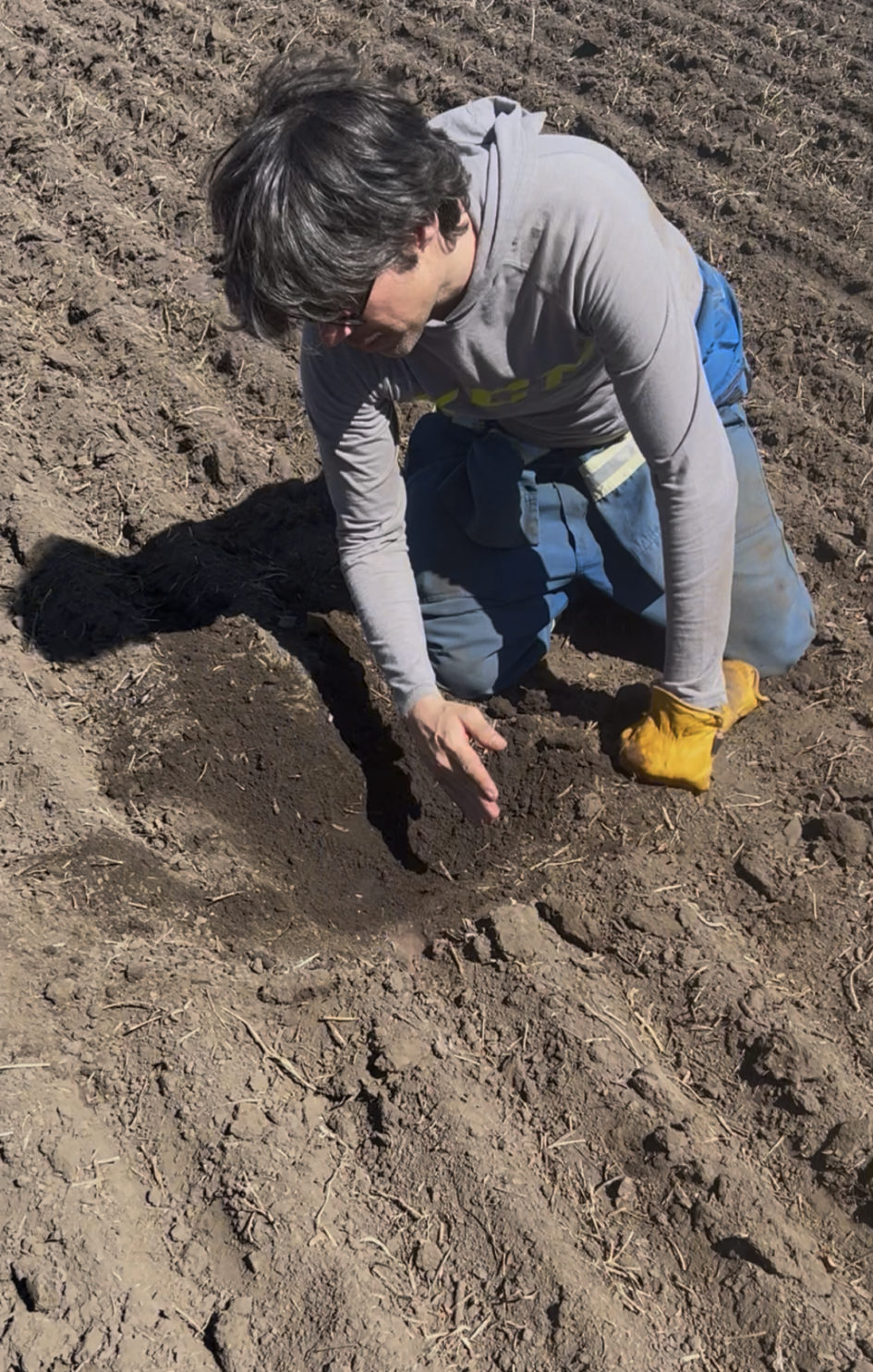
Brad showing us the moisture level of the soil
Rebecca shared just how demanding the past few weeks had been for Brad and his dad. On more than one occasion, Brad was in the field until 1 am, only to be back up a few hours later and heading out again.
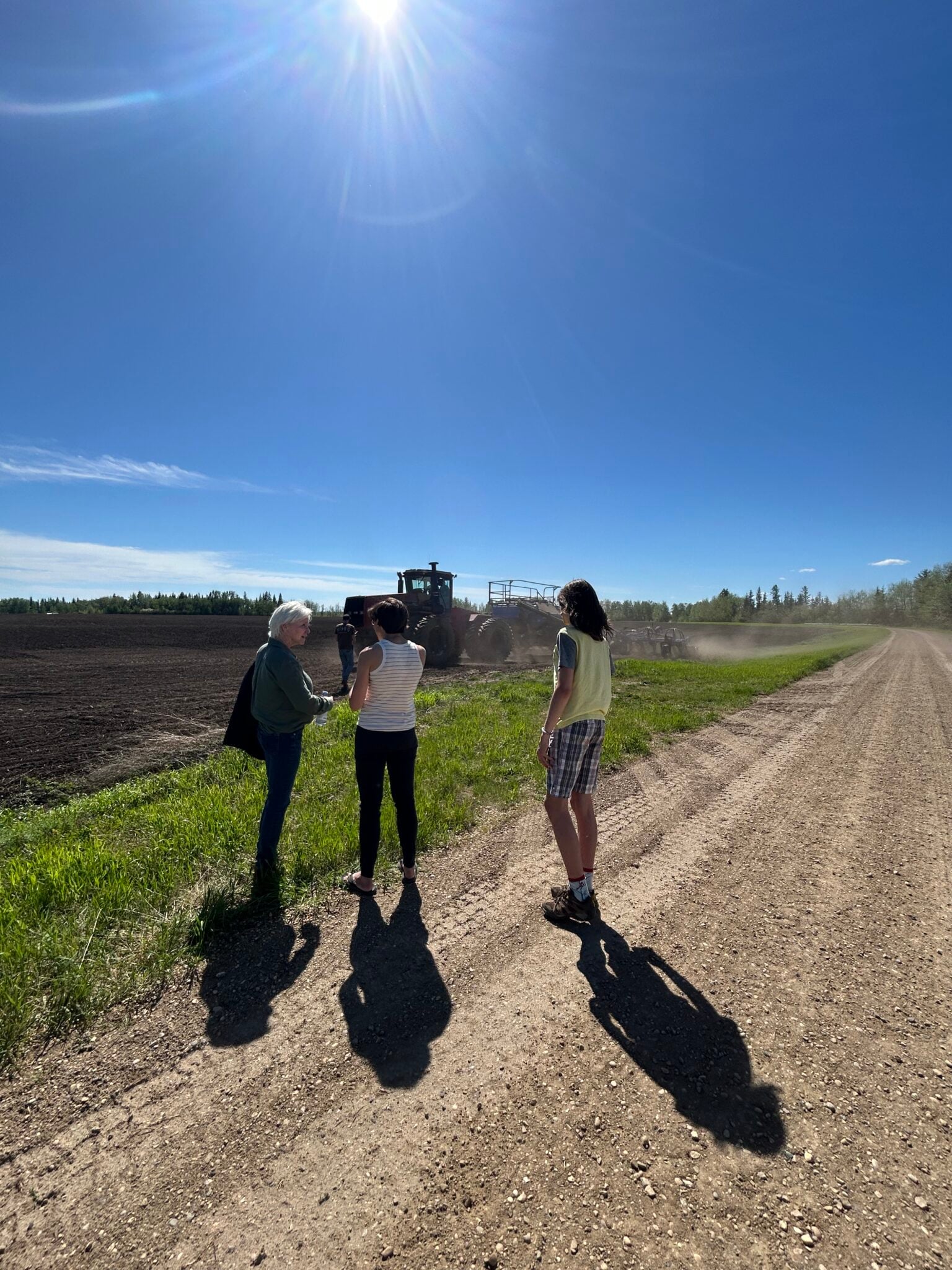
Kathy Smith catching up with Rebecca and Birch Rabiey
We were fortunate enough to spend time with Brad during the busiest times of year on the seed drill while him and his dad worked the fields. A seed drill is a piece of farm equipment that plants seeds at a consistent depth and spacing in the soil. It helps ensure better seed-to-soil contact, improves germination, and creates more even crop growth than simply scattering seeds on the ground.
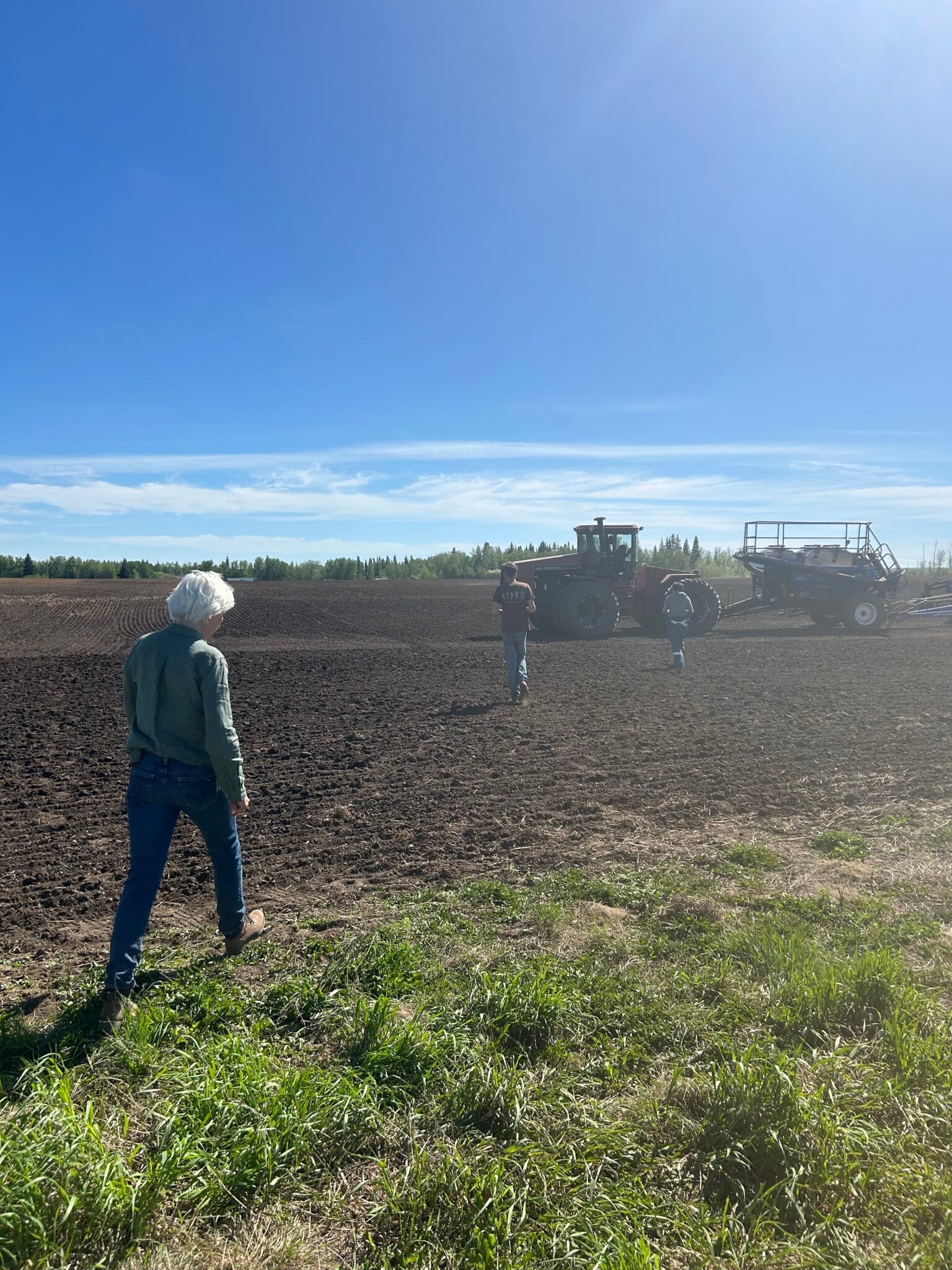
Kathy walking to get into the drill seed machine for a round around the farm with Brad Rabiey
Brad also reflected on how much farming has changed over the years. Modern equipment allows farmers to seed far more efficiently than previous generations ever could. He laughed as he talked about how, not all that long ago, farmers relied on horses and hand labour to get crops in the ground which took days and weeks to seed compared to doing it in a quarter of the time thanks to advance machines.
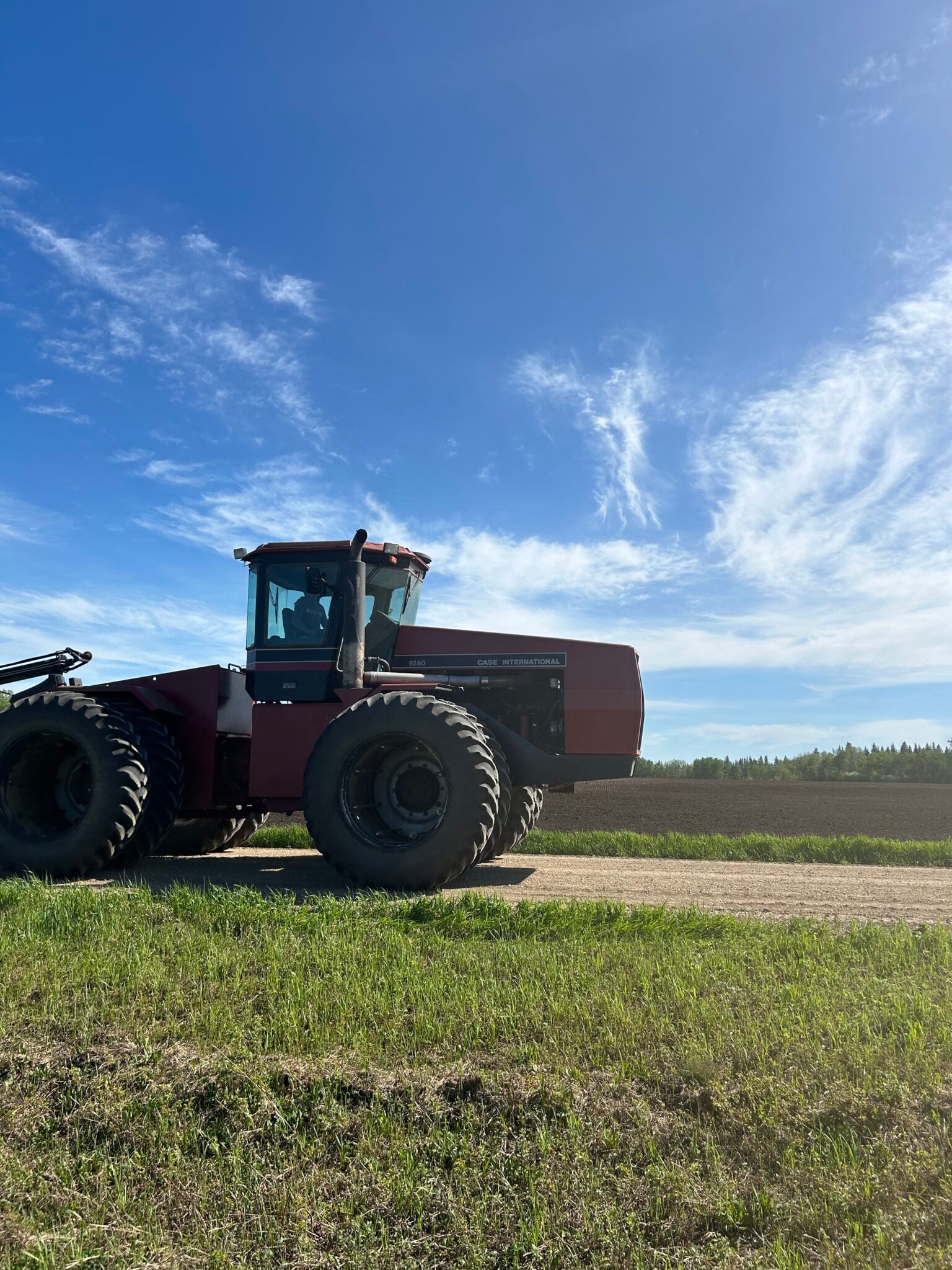
Brad Rabiey in the seed drill
As the acres passed by outside the seed drill window, it was easy to see that farming is more than a profession for Brad. It is a way of life, deeply connected to family, community, and the land he is proud to call home.
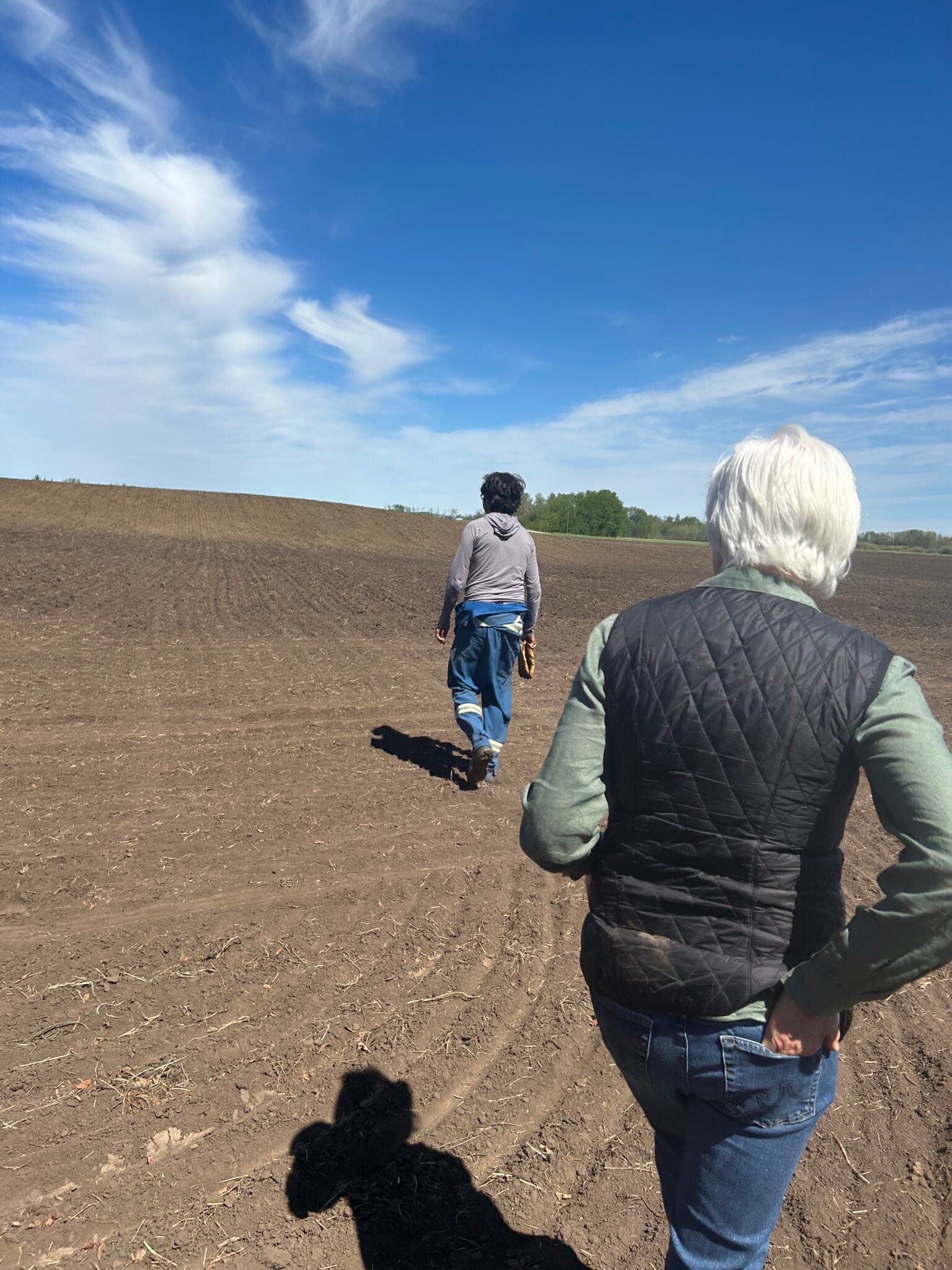
Kathy and Brad walking on the Rabiey’s newly seeded farm
From Conventional to Organic Farming
One of the most interesting parts of our visit was hearing the conversations between Brad and his dad.
Brad grew up farming alongside his dad on land that was once worked and owned by his grandfather. While they share a deep love for farming, they have different perspectives on how it should be done. Brad’s dad, who describes himself as old school, often jokes that conventional farming is the easier route.
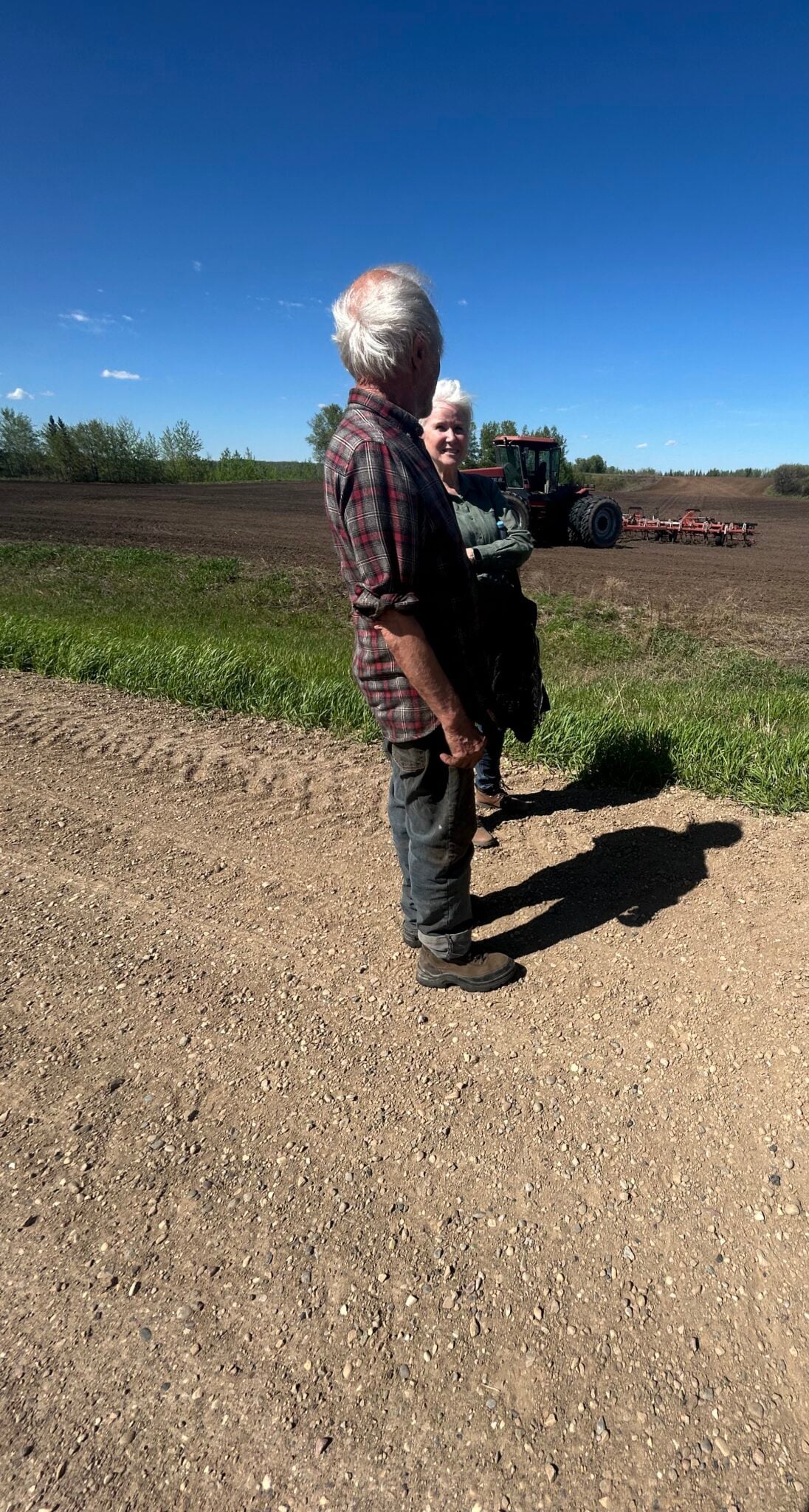
Brad’s Dad and Kathy Smith catching up on the Rabiey farm
However, Brad sees things a little differently. He believes that easier is not always better. For him, organic farming is about taking a more hands-on approach, paying close attention to soil health, crop rotations, and the long-term health of the land. Brad highlighted that although there are many conventional farms around the area his farm which is smaller can yield more with each harvest compared to conventional farms which he hopes is motivation for conventional farmers to make the switch.
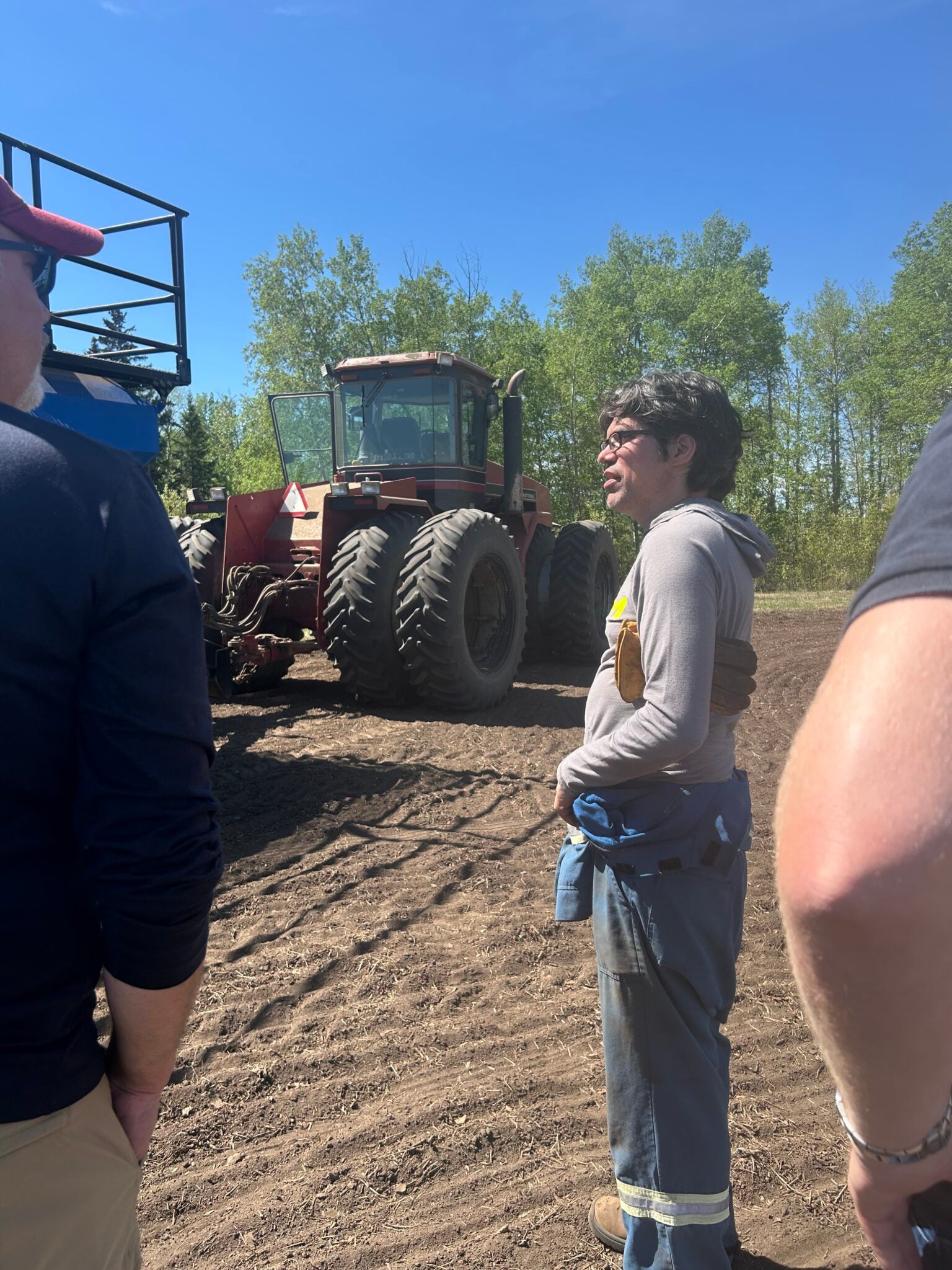
Brad Rabiey explaining what a seed drill machine does
As we rode together in the seed drill Brad explained that organic farming requires more planning and more time in the field, but he believes the extra effort is worth it. Producing healthy, high-quality food while caring for the land for future generations is what motivates him.
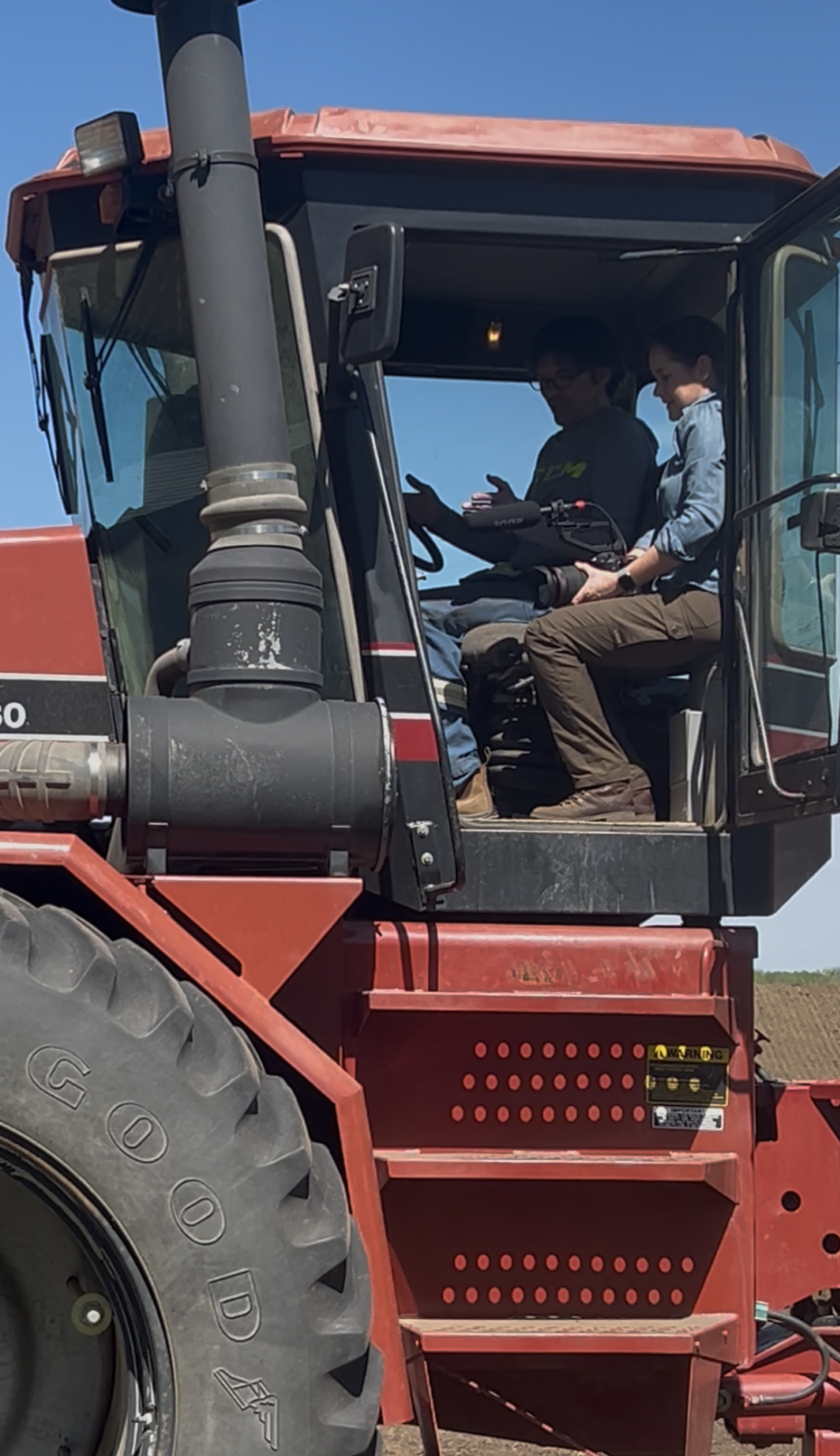
Alonna and Brad in the seed drill machine
We also have to say how important the support of family is, although Brad and his dad had spent hours on the farm working on seeding, Rebecca and Brad’s mom are keeping the house running by doing laundry, cooking, cleaning and home schooling their two sons Birch and Field. Without their support Brad explains the work him and his dad do on the field would not be possible.
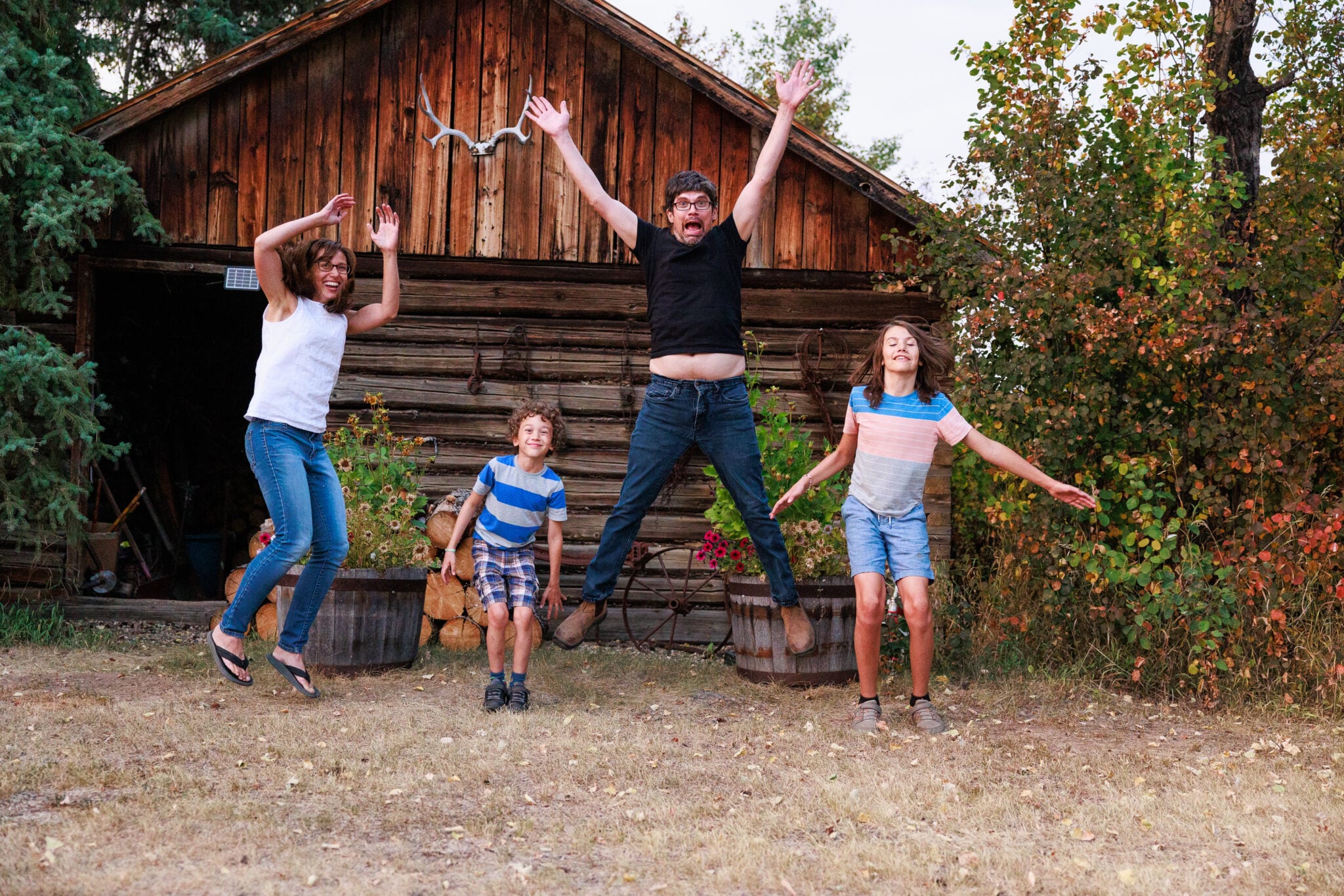
The Rabiey family having fun on their farm during our 2025 visit
Watching Brad and his dad work side by side was a reminder that every generation brings a different perspective to the farm, but both share the same goal of growing the best crop possible.
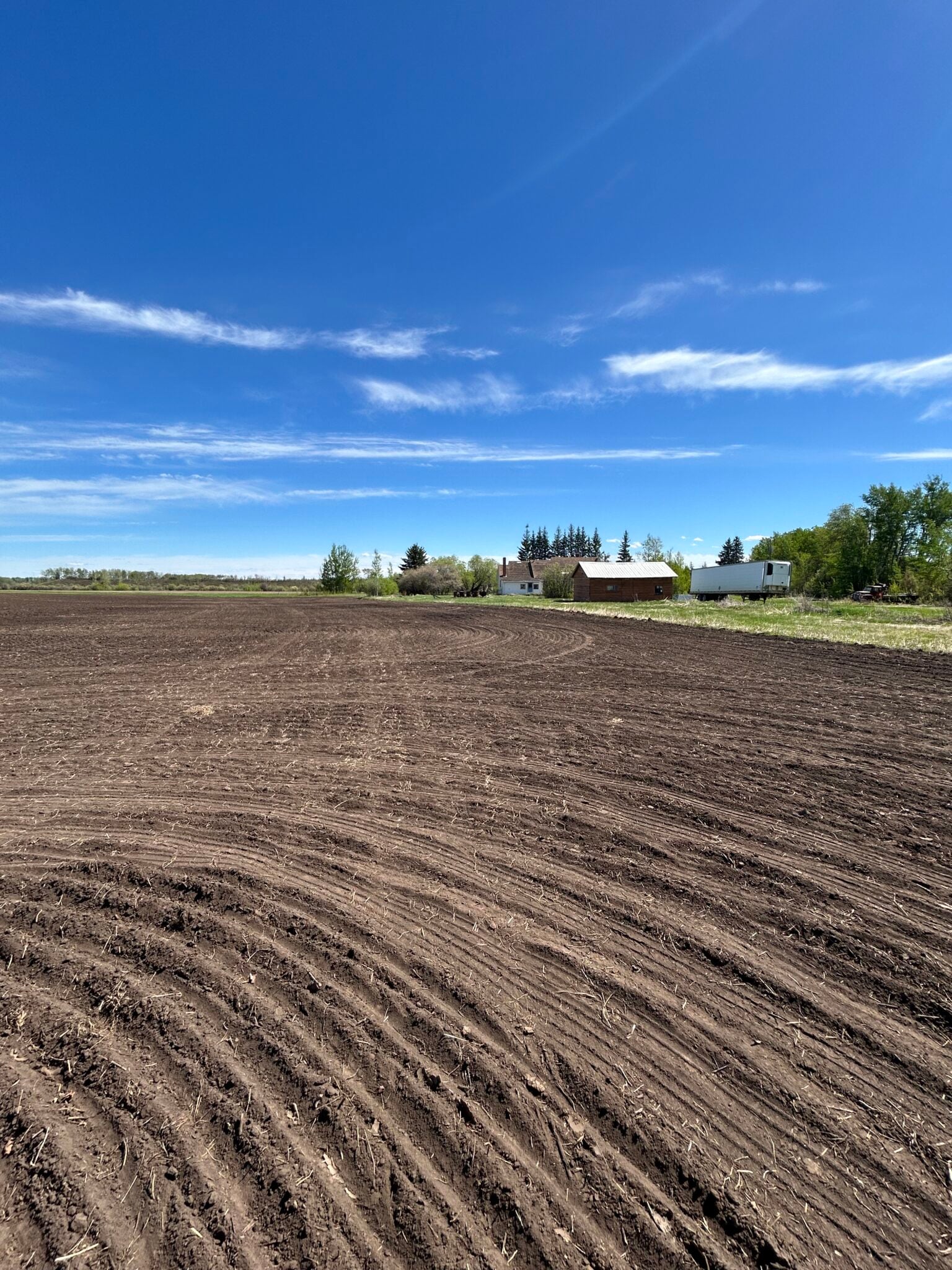
This is the farm the Rabiey’s purchased a few years ago
One of the highlights this year was seeing a farm that Brad purchased a few years ago. Previously operated conventionally, the land has been carefully transitioned to an organic farm. Brad explained that before he could grow organic oats, he spent three years building soil fertility through crop rotations that included peas, faba beans, and flax. By the time we arrived, the field had been halfway seeded with its first organic oat crop, the same oats that will eventually make their way to our facility for processing.
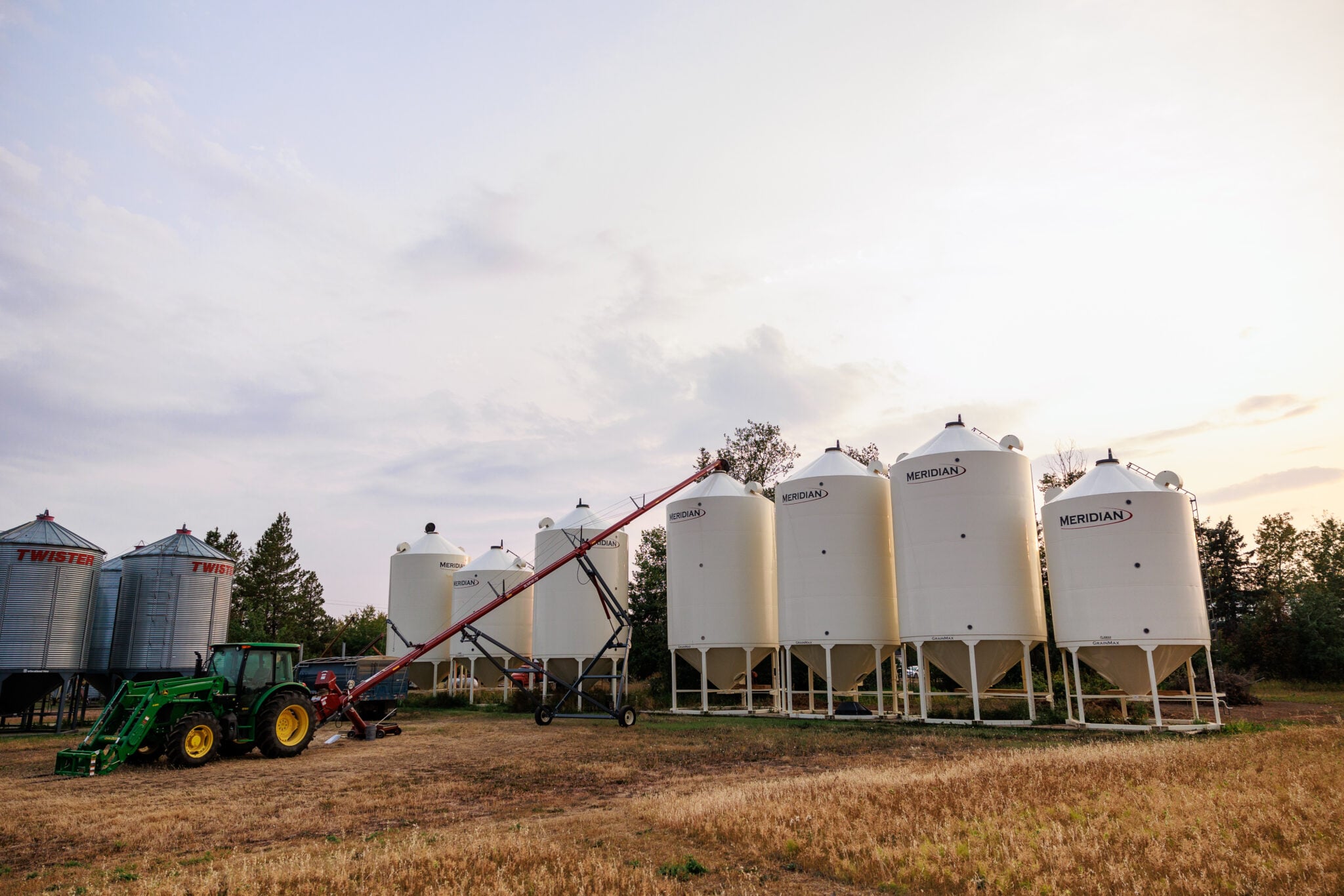
Oats being stored in silos from 2025 harvest season
The new farm sits alongside the family’s existing organic acreage and has allowed them to expand their operation. However, Brad and his dad are intentional about growth. Because organic farming requires so much hands-on management, they prefer to expand at a pace that allows them to maintain the quality and care they put into every field.
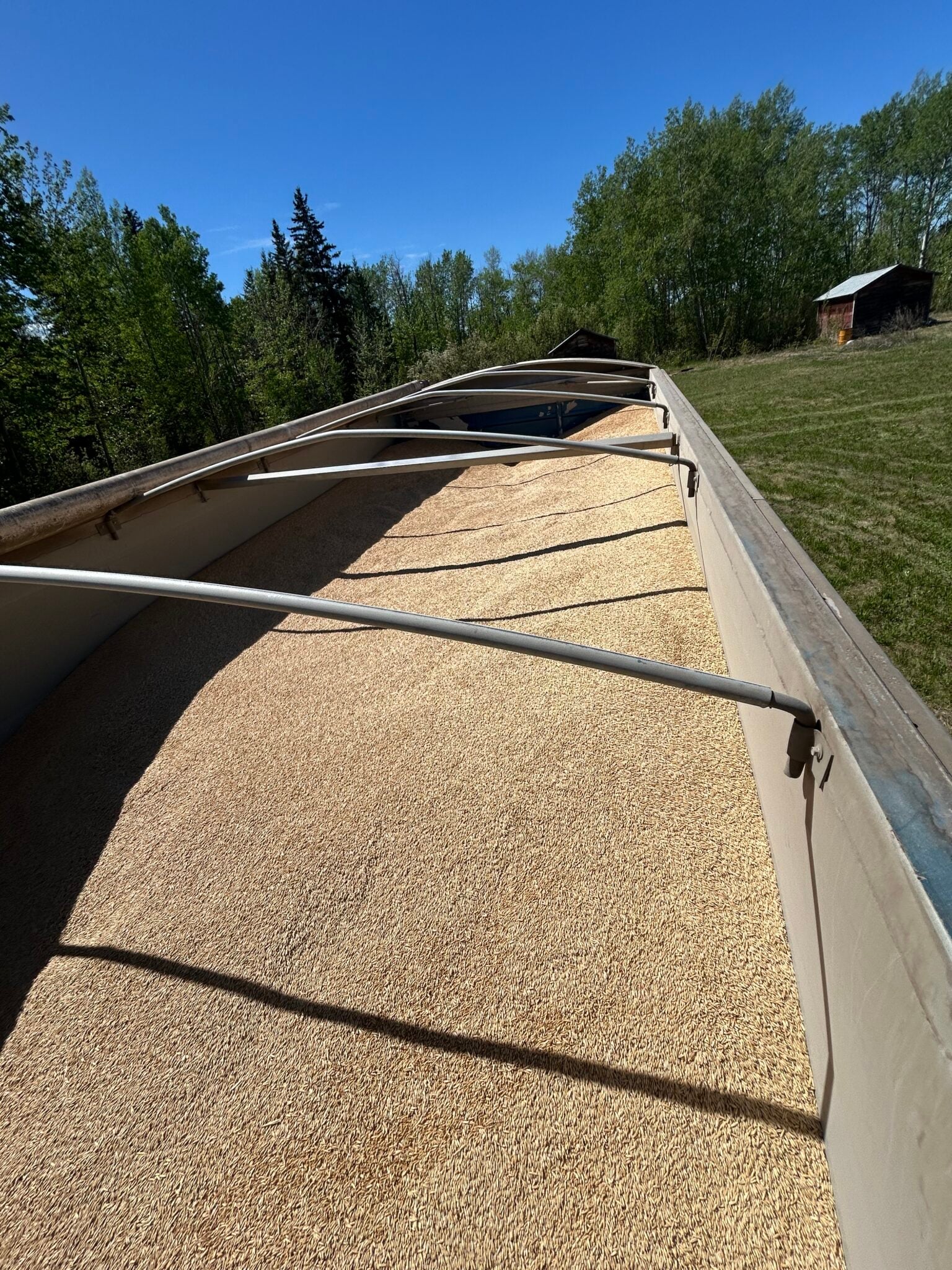
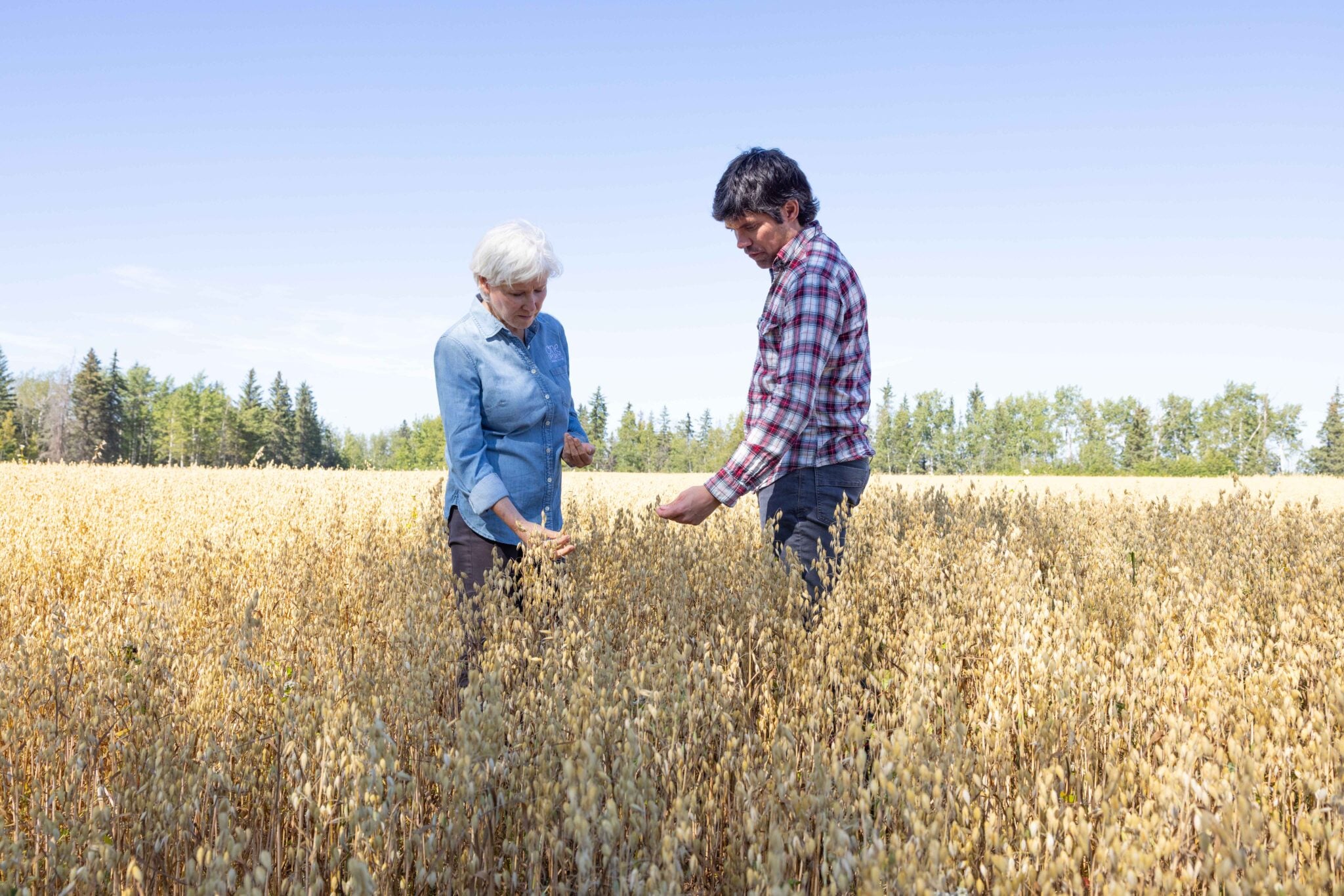
This is the oats that were seeded on Brad’s Farm (He only uses the best oat crops to seed)
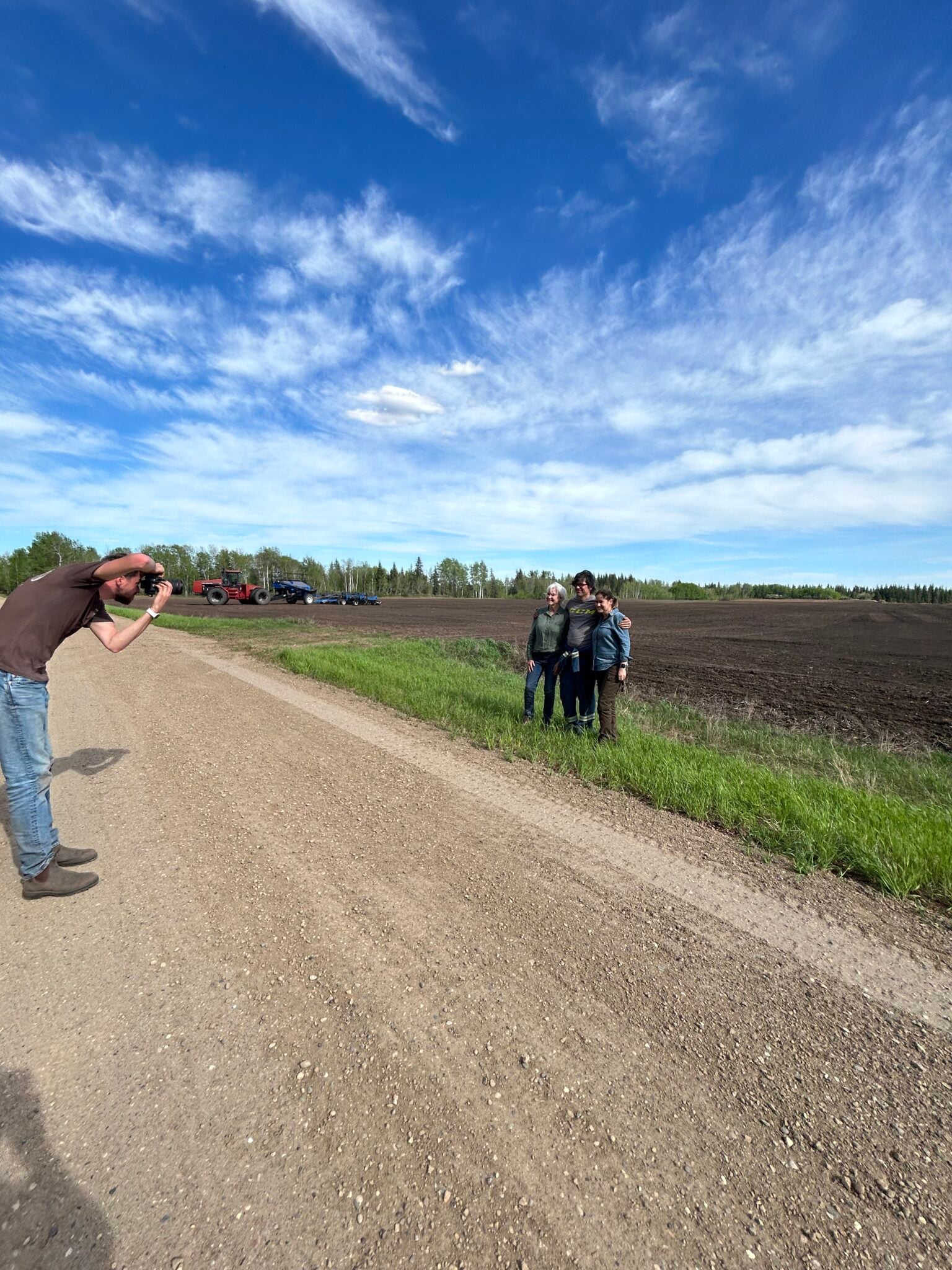
We also want to take this time to give a special shoutout to our videographer, Ethan, who brings these stories to life on screen. That often means running behind a combine kicked up with dust, squeezing into tight spaces inside machinery to capture a farmer’s point of view, or trekking across uneven fields with heavy equipment in tow to get the right shot. It takes a lot of effort behind the scenes to bring full transparency from field to table, and we are grateful to everyone who helps make that possible.
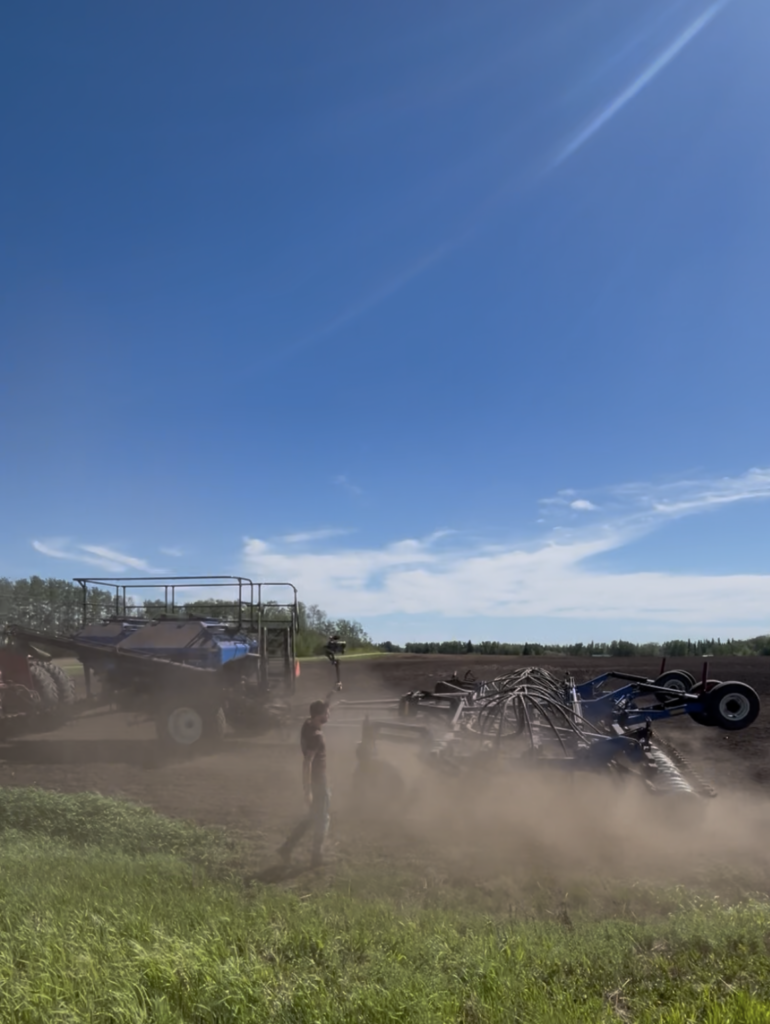
Ethan getting shots of Brad seeding in action
Stay tuned on our Facebook, Instagram, and Newsletter to watch the full seeding story and follow how our oats are grown from seed to harvest.
REFERENCES
- Alberta, Canada: Oil & Gas Available from: https://novilabs.com/alberta-canada-oil-gas/ Accessed on: June, 2026